
Paint Correction Before After Photos Explained
A glossy after shot can stop you mid-scroll, but the best paint correction before after photos tell a more useful story than “dirty” versus “clean.” They show whether defects were truly removed, whether the paint was treated responsibly, and whether the finish will still look exceptional once the vehicle leaves the detailer’s care. For Denver drivers dealing with sun exposure, winter road grime, and frequent wash-induced swirls, that distinction matters.
Paint correction is not a wax application or a quick polish meant to hide flaws for a few days. It is a measured process of refining the clear coat to reduce or remove visible defects, restoring clarity, gloss, and reflection. The right result depends on the vehicle’s paint condition, paint thickness, age, and your expectations for the vehicle.
What Paint Correction Before After Photos Should Show
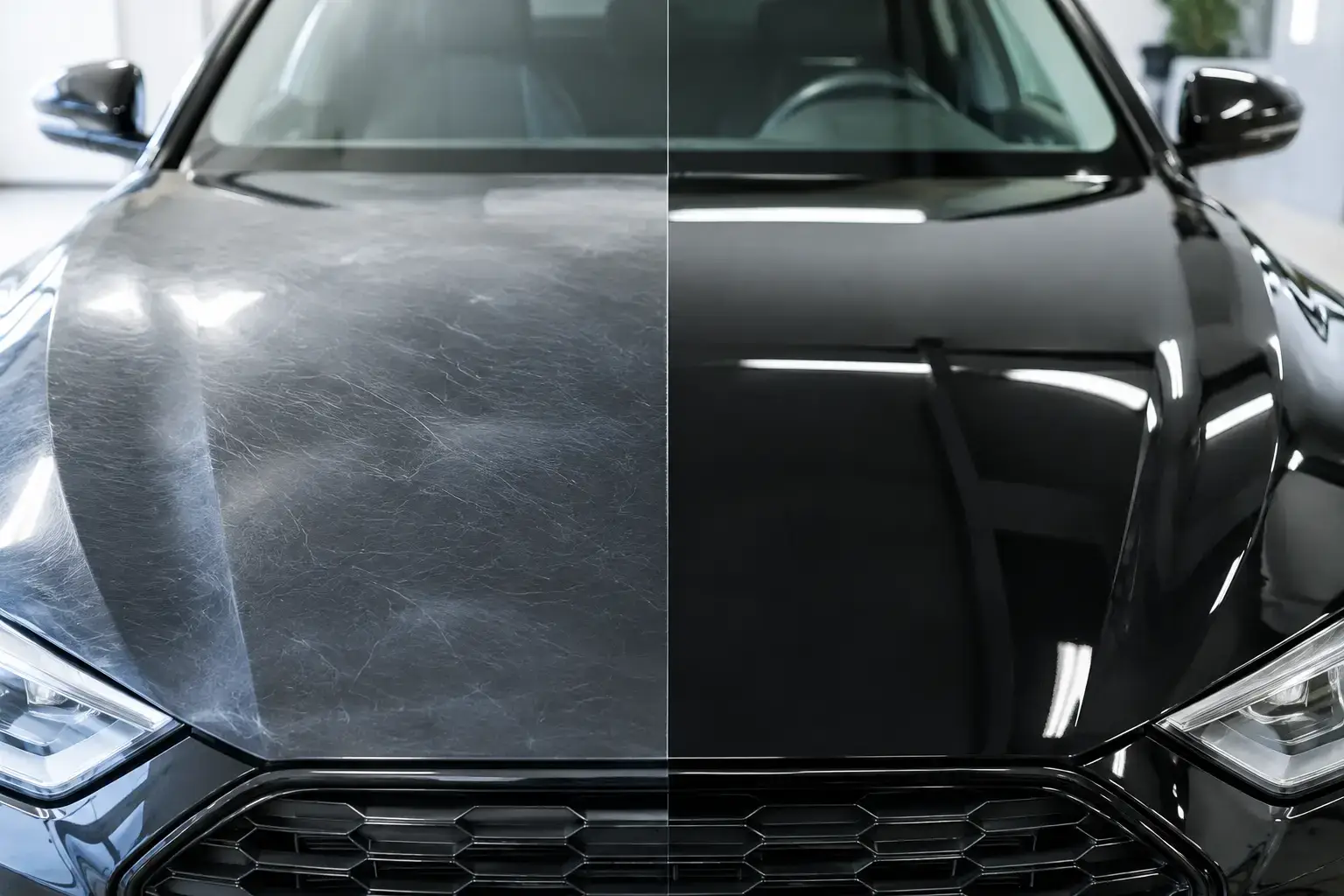
The most honest transformation photos focus on paint defects that are difficult to disguise. Look for close-up views of swirl marks, light scratches, oxidation, water-spot etching, haze, or dullness before correction. In the after image, those same panels should show cleaner reflections and sharper color without relying on a dramatically different camera angle.
A good detailer will often use a focused inspection light in the before image. This makes circular wash marks and fine scratches visible, even on paint that looks acceptable in shade. After correction, the same lighting should reveal a substantially clearer surface. The point is not to make every vehicle look perfect on a phone screen. It is to demonstrate a meaningful improvement under the light that exposes defects.
Wide shots are valuable too, especially on larger SUVs, trucks, and dark-colored vehicles. They show the overall depth and uniformity of the finish. Still, close-up, same-panel comparisons are usually the strongest proof of correction work because they make it easier to assess exactly what changed.
The angle and lighting should be consistent
Before-and-after images are most credible when the detailer photographs the same panel from a similar distance and angle. If the before photo is taken in harsh direct light and the after photo is taken in deep shade, the comparison may look dramatic, but it does not tell you much about the quality of the correction.
Lighting will never be perfectly identical during a mobile appointment, and that is understandable. What matters is transparency. A trustworthy portfolio uses lighting to reveal the condition, not to conceal it. Sunlight, LED inspection lights, and garage lighting each show defects differently, so a combination of views often provides the clearest picture.
Look beyond the shine
Almost any freshly washed vehicle can look glossy in the right conditions. Paint correction has a different visual signature: reflections become more defined, metallic flake appears clearer, and the color looks richer because haze and fine marring have been reduced.
On black, dark blue, or dark gray paint, the improvement is often especially obvious. These colors expose swirl marks readily, but they also make a properly corrected finish look remarkably deep. White and silver vehicles can be more subtle in photos. On those colors, focus on the clarity of reflected lines, the cleanliness around trim and emblems, and whether the paint looks uniform rather than chalky or flat.
What Photos Cannot Tell You on Their Own
Photos are useful, but no image can confirm every part of a professional paint correction service. You cannot see paint-thickness readings, the condition of the clear coat beneath the surface, or how aggressively a technician polished a panel. That is why the process behind the photos matters as much as the visible transformation.
Safe correction begins with a proper wash and paint decontamination. Road film, bonded industrial fallout, brake dust, and other contaminants must be removed before polishing. Skipping this stage can drag contamination across the paint and create additional marring.
The technician should then inspect the paint under proper lighting and determine a sensible correction plan. A vehicle with light wash swirls may benefit from a single-stage polish. Deeper scratches, oxidation, or heavy marring may require multi-stage correction, where a more corrective polishing step is followed by a refining step for greater gloss.
More correction is not always better. Every polishing process removes a very small amount of clear coat. The goal is to achieve the best safe improvement, not to chase complete defect removal at the expense of the paint’s long-term health. On a newer luxury vehicle, a well-maintained classic, or a vehicle with thin or previously corrected paint, preserving clear coat is especially important.
How to Read the Difference Between Correction and Concealment
Some products can temporarily fill fine scratches and make paint appear smoother. There is nothing wrong with a gloss-enhancing product when it is presented honestly, but filling defects is not the same as correcting them.
A corrected panel has had defects mechanically reduced through polishing. A concealed panel may look excellent immediately after service, then reveal the same swirls after a few washes or once the oils and fillers wear away. If you are evaluating a detailer’s results, ask what steps were used and whether the finish was inspected after polishing with panel prep or a similar method that removes residue.
You can also ask about the expected correction percentage. No responsible professional should promise that every scratch will disappear. Deep scratches may have penetrated beyond the clear coat, and rock chips, etching, and paint failure require a different repair approach. An honest estimate such as significant swirl reduction with some deeper defects remaining is often a better sign than a promise of perfection.
Why Colorado Vehicles Often Need More Than a Basic Polish
Colorado paint takes a steady beating. UV exposure can dull unprotected paint, while winter sand, road salt, and dirty snow create abrasive buildup. Spring and summer bring pollen, tree sap, bug residue, and mineral-heavy water spots. Even careful owners can develop swirls through automatic car washes or improper hand-washing techniques.
This is why paint correction before-and-after results can be so dramatic for Denver-area vehicles. The change may not come from one major event. It is often the accumulated effect of years of minor surface damage that slowly steals the vehicle’s clarity.
After correction, protection is the practical next step. A quality ceramic coating can add hydrophobic behavior, UV resistance, chemical resistance, and easier maintenance. It will not make a vehicle scratch-proof, but it helps preserve the corrected finish and makes routine washing less demanding. For some owners, a professional sealant may be the better fit based on budget, parking conditions, and how long they plan to keep the vehicle.
Questions Worth Asking Before You Book
A portfolio should start the conversation, not end it. Ask whether the vehicle will receive a paint inspection before service, what correction level is recommended, and which defects are realistically removable. It is also reasonable to ask how the paint will be protected afterward and what wash method will help keep new swirls from returning.
For a daily-driven family SUV, the best value may be a single-stage correction that dramatically improves gloss while staying within a practical budget. For a garage-kept enthusiast vehicle or a newly purchased luxury car, multi-stage correction and ceramic coating may make more sense. The right service is tied to your vehicle, your standards, and the finish you want to maintain.
At FB Mobile Auto Detailing & Coating, that assessment can happen at your home or workplace, so you do not have to sacrifice a day at a shop to get a professional answer about your paint.
The most satisfying after photo is not just the one that looks flawless under perfect lighting. It is the one that reflects a careful process, a realistic plan, and a finish you will be proud to see every time you walk back to your vehicle.


