
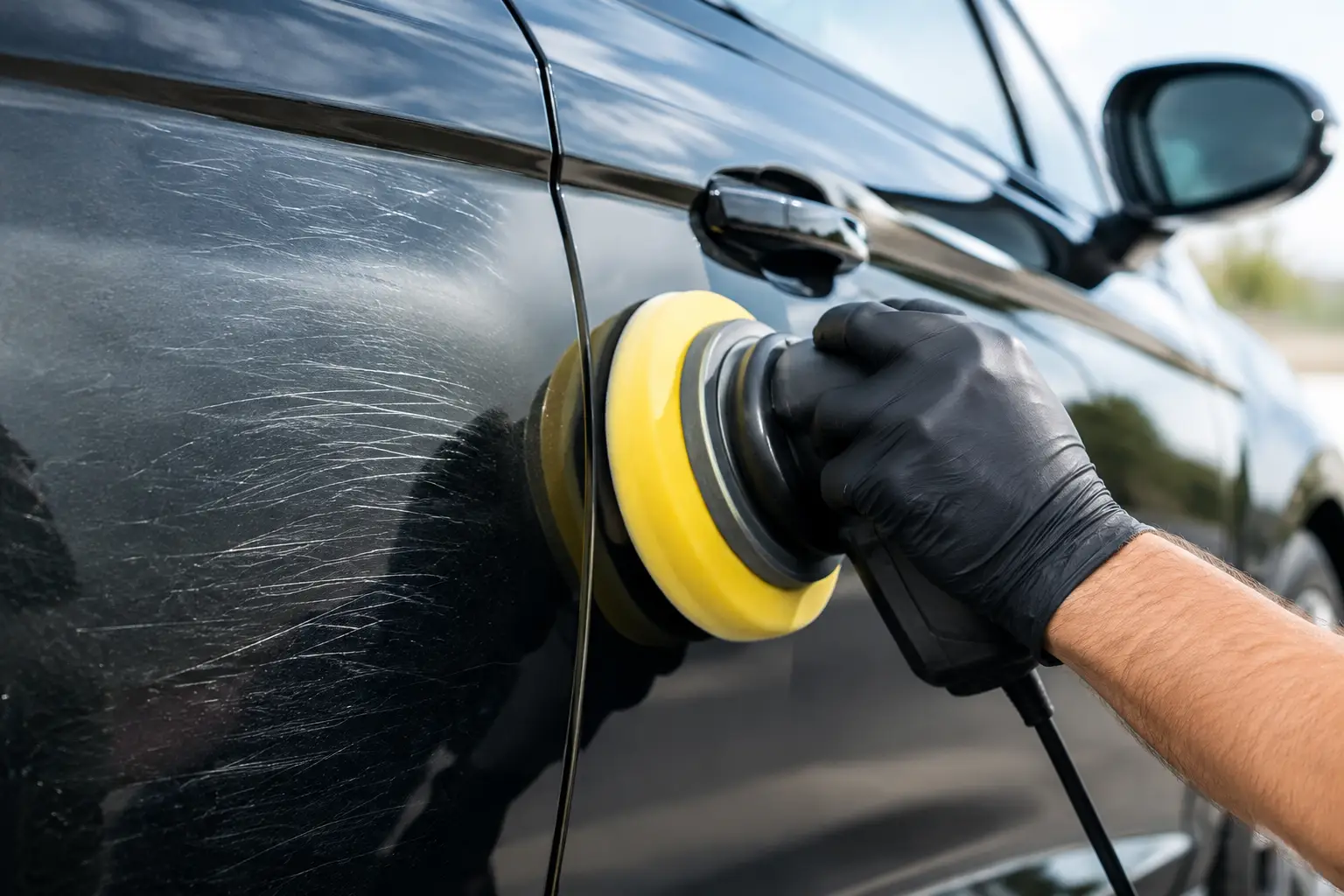
Can Detailing Remove Scratches From Your Car?
A dark vehicle can look freshly washed in the morning and covered in fine lines by afternoon. Sunlight, parking-lot dust, automatic car washes, winter road grime, and even wiping a dry panel can reveal swirl marks that were easy to miss before. So, can detailing remove scratches? In many cases, yes – but the answer depends on how deep the damage reaches into the paint.
Professional detailing is not simply about making a vehicle shine. When paint correction is involved, it is a measured process of leveling surface defects so light reflects evenly again. The right approach can dramatically improve gloss and remove many of the scratches owners see every day. However, no responsible detailer should promise to erase damage that has cut through the vehicle’s clear coat or color layer.
Can Detailing Remove Scratches? It Depends on the Depth
Most modern vehicles have several paint layers: primer, color coat, and a transparent clear coat on top. The clear coat provides gloss and helps protect the color beneath it. Many common wash marks, swirls, water-spot etching, and light scuffs live in this upper layer.
Paint correction can reduce or remove those defects by carefully polishing away a microscopic amount of clear coat around the scratch. Rather than filling the mark with a temporary product, the process levels the surrounding surface so the scratch becomes far less visible or disappears altogether.
A practical at-home check is the fingernail test. Gently run a clean fingernail across the scratch. If your nail does not catch, the mark is often a strong candidate for polishing. If it catches noticeably, the scratch may be too deep for full removal without taking away more clear coat than is safe.
That test is not a final diagnosis. A professional inspection under proper lighting provides a better answer, especially on luxury vehicles, older paint, or panels that may have been repainted before. Paint thickness, paint condition, and the location of the damage all matter.
Scratches Detailing Can Usually Improve
The most satisfying results typically come from defects caused by routine use and improper washing. These marks affect how the paint reflects light, even when the panel itself is structurally sound.
Light swirl marks are one of the most common examples. They often appear as circular cobweb patterns in direct sunlight or under parking-garage lights. A single-stage polish can frequently make a major difference, especially if the paint is otherwise in good condition.
Light scratches from branches, loading groceries, brushing against a jacket zipper, or wiping dusty paint can also respond well to correction. The same is true for paint transfer, such as a light rub from a bumper or garage object. In many cases, the transferred material sits on top of the clear coat and can be safely removed before polishing the area.
Water spots and mild oxidation can be mistaken for scratches because they interrupt the finish and dull the panel. These issues may require decontamination and polishing rather than aggressive correction. Identifying the defect correctly prevents unnecessary work and protects the remaining clear coat.
When a Scratch Needs More Than Detailing
Deep scratches are different. If the damage exposes the color coat, primer, bare metal, or plastic beneath the paint, polishing alone cannot rebuild what is missing. It may soften sharp edges and improve the overall appearance, but it cannot restore the original paint layers.
Door-edge chips, deep key marks, rock chips, and damage from a significant scrape often require touch-up paint, wet sanding, localized paint repair, or body-shop refinishing. On a white, silver, or light-colored vehicle, a deep scratch can sometimes be less obvious after careful improvement. On black or dark metallic paint, it may remain visible even when its edges are refined.
There is also a trade-off with repeated correction. Clear coat is finite. Chasing complete removal of every isolated defect is not always the best decision, particularly on an older vehicle or paint that has already been polished several times. A skilled detailer balances defect removal with long-term paint preservation.
For many daily drivers, an 80 to 90 percent improvement is the ideal result. The paint looks dramatically clearer and glossier without unnecessarily sacrificing clear coat for a flaw that only appears from a few inches away.
What Professional Paint Correction Involves
Quality scratch removal begins long before a polishing machine touches the paint. The vehicle should be thoroughly washed and chemically decontaminated to remove road film, iron particles, and bonded contaminants. A clay treatment or other mechanical decontamination may be used when needed to create a smooth surface.
Next, the paint is evaluated under bright inspection lighting. This reveals swirls, isolated scratches, haze, and previous repair work that a standard wash may hide. Sensitive trim and edges are protected, and the detailer selects a pad, polish, and machine combination appropriate for the paint.
A single-stage correction is often suitable for light swirls and general dullness. It provides meaningful improvement in gloss and clarity with a conservative approach. Multi-stage paint correction uses a more intensive compounding step followed by a finishing polish. This is often the better option for heavier defects, but it requires more time, more expertise, and a careful assessment of paint thickness.
Not every vehicle needs the most aggressive process. A family SUV with typical Colorado road wear may benefit most from a practical one-step enhancement and durable protection. A well-kept luxury vehicle or classic car may justify a multi-stage correction designed to bring out maximum clarity before a coating is applied.
Why Colorado Conditions Make Protection Matter
Correcting paint is only half the job. Once the finish has been refined, protecting it helps preserve the results and makes future washing safer. Denver-area vehicles face intense UV exposure, snow, road salt, windblown grit, seasonal contaminants, and frequent temperature swings. Each can contribute to a duller finish over time.
A quality paint sealant, wax, or ceramic coating adds a sacrificial layer between the clear coat and the environment. Ceramic coatings are especially valued for chemical resistance, UV protection, hydrophobic behavior, and easier maintenance. Water and grime release more easily, which can reduce the temptation to scrub a dirty vehicle dry.
A coating will not make a vehicle scratch-proof. It can still collect swirls if it is washed with dirty towels, abrasive brushes, or improper technique. Its value is in making the surface easier to clean and helping maintain the gloss created during correction.
How to Avoid Bringing Scratches Back
Paint correction can make a vehicle look exceptional, but maintenance determines how long that finish stays that way. Avoid running a dry towel across dusty paint. Rinse loose contamination first, then use clean wash media and plenty of lubricating car shampoo.
Automatic tunnel washes can be convenient, but their brushes may carry grit from prior vehicles. Touchless washes are generally gentler on paint, though their chemicals can be strong and may not fully remove bonded road film. A careful hand wash is usually the best choice for preserving a corrected finish.
Drying matters as much as washing. Use clean, high-quality microfiber towels or a dedicated vehicle air dryer, and avoid using household towels, old T-shirts, or anything that may trap debris. Keep wash towels, wheels towels, and interior towels separate so brake dust and grit do not migrate onto painted panels.
If you notice a new scratch, resist the urge to aggressively rub it with a random compound from the garage. The wrong product or technique can create haze, remove too much clear coat, or turn a small spot repair into a larger correction need.
Choosing the Right Result for Your Vehicle
The best scratch-removal service is not always the one that promises perfection. It is the one that evaluates the condition of your paint, explains what can realistically be improved, and recommends a process that fits your vehicle and goals.
For a lease return, improving swirls and visible scuffs can help the vehicle present better at inspection. For a truck or family SUV, the priority may be restoring gloss and adding durable protection that simplifies maintenance. For an enthusiast, luxury, or classic vehicle, a more meticulous multi-stage correction may be worthwhile before ceramic coating.
At FB Mobile Auto Detailing & Coating, that evaluation can happen at your home or workplace, so professional paint care does not have to take over your schedule. The most rewarding result is not a paint finish that looks good only on pickup day, but one that stays cleaner, reflects light beautifully, and gives you a reason to look back at your vehicle after you park it.


