
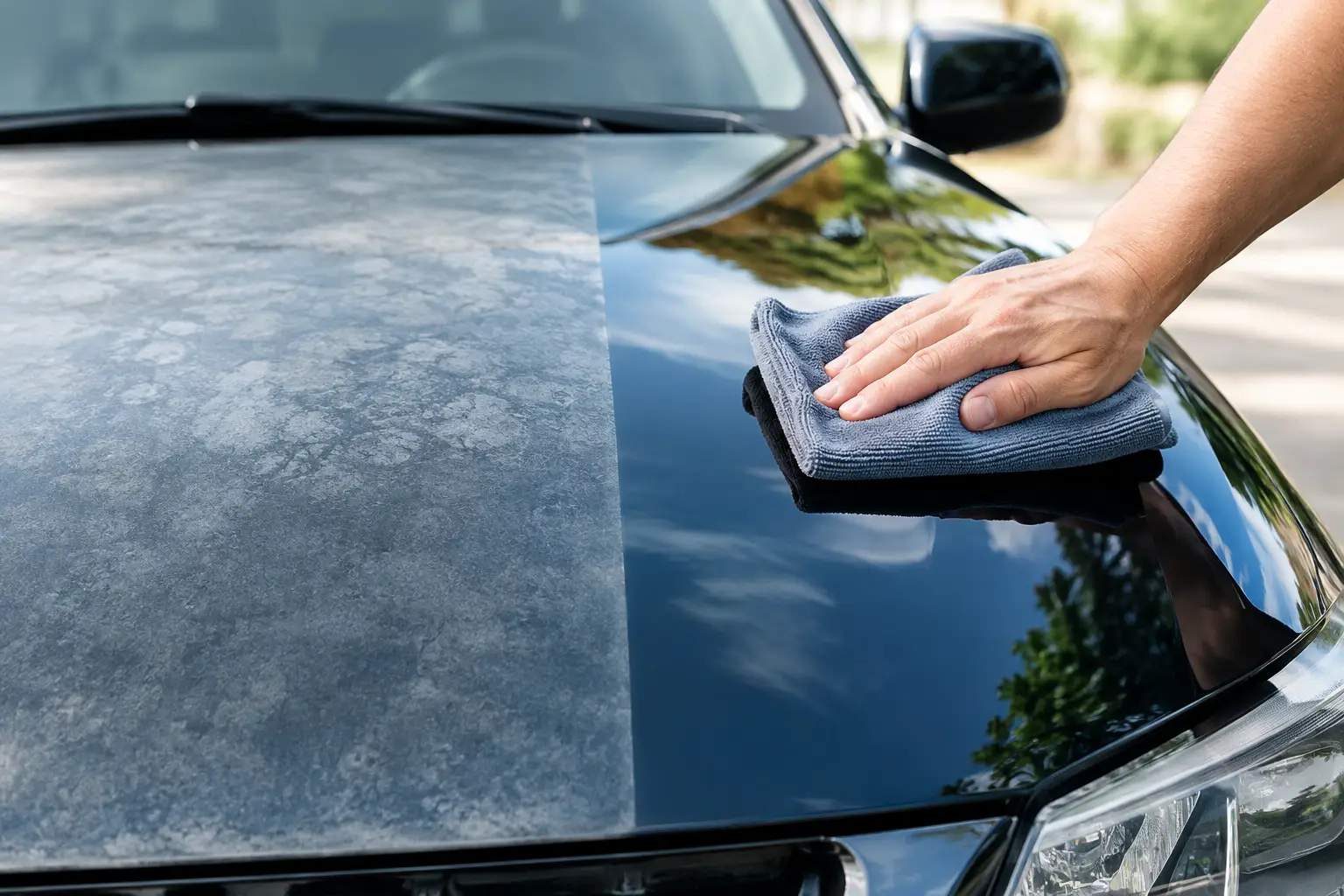
Car Paint Oxidation Removal: What Actually Works
That chalky, faded look on your hood or roof is not just dirt that needs a better wash. It is often clear-coat damage caused by UV exposure, contamination, and time. Proper car paint oxidation removal can bring back depth, gloss, and color clarity, but the right approach depends on how far the damage has progressed.
For Denver-area vehicles, oxidation is especially common on horizontal panels. Colorado sun, dry air, winter road treatment, and frequent temperature changes put constant stress on exterior finishes. A daily-driven SUV parked outside may show oxidation sooner than expected, while a garage-kept luxury vehicle can still develop it if contaminants and old protection are left on the paint.
What Paint Oxidation Actually Is
Most modern vehicles have a color coat covered by a transparent clear coat. That clear coat gives paint its gloss and serves as its first line of defense against ultraviolet rays, moisture, road grime, and airborne contamination.
Oxidation begins when that surface breaks down. At first, the finish may simply look less reflective after washing. As the damage advances, paint can feel rough, look hazy, or develop a dull, chalk-like appearance. Dark colors often appear gray or cloudy, while red paint may lose richness and shift toward a pinkish, faded tone.
People often call any dull finish “oxidized,” but several conditions can create a similar look. Embedded rail dust, hard-water spots, road film, old wax residue, and fine swirl marks can all reduce gloss. That distinction matters because not every dull vehicle needs the same correction process.
Signs Your Vehicle Needs Car Paint Oxidation Removal
A clean vehicle can still show oxidation. Look closely in direct sunlight or under bright garage lighting. If the paint appears cloudy even after a careful hand wash, or if one panel looks noticeably flatter than another, oxidation may be present.
The hood, roof, trunk lid, and upper door areas are usually the first places to inspect. These panels receive the most sun. You may also notice that water no longer beads, the surface feels dry rather than slick, or polishing a small test spot by hand produces a dramatic difference in color and shine.
A professional inspection is valuable when the surface looks severely faded. Light oxidation can often be corrected safely. Severe oxidation may mean the clear coat has become too thin or has started failing. Once clear coat is peeling, flaking, or cracking, polishing cannot rebuild it. Repainting is the proper long-term repair.
Why a Basic Wash or Wax Is Not Enough
Washing removes loose dirt and road film. It does not remove the compromised layer of clear coat responsible for oxidation. Wax can temporarily darken the finish and improve water behavior, but it may only mask the problem for a short time.
Some retail products promise instant restoration, and a mild cleaner wax can help on very light oxidation. The trade-off is that many consumer products use fillers or aggressive abrasives without giving the user much control. Used repeatedly or incorrectly, they can create uneven results, haze the paint, or remove more clear coat than necessary.
Effective oxidation removal is controlled paint correction. The goal is not to polish as aggressively as possible. It is to remove the minimum amount of damaged material needed to restore clarity while preserving as much healthy clear coat as possible.
The Professional Paint Correction Process
A quality correction service starts long before the polishing machine touches the paint. Skipping preparation can trap contamination under a polishing pad and create new scratches.
Decontamination Creates a Clean Starting Point
The vehicle is carefully washed to remove dirt, salt, and traffic film. Detailers then address bonded contaminants that remain on the surface, including iron particles, tree sap, industrial fallout, and stubborn road grime. Depending on the vehicle’s condition, a clay treatment or synthetic decontamination process may be used to create a smooth surface.
This step matters because a vehicle can look clean while still holding contaminants that interfere with polishing and protection. It also gives the technician a clearer view of the true paint condition.
Paint Inspection Determines the Right Approach
Not all paint is equally hard, and not all oxidation is equally deep. A skilled technician evaluates the paint under proper lighting, identifies scratches and defects, and may measure paint thickness where appropriate. The goal is to determine whether a single-stage polish will provide meaningful improvement or whether a multi-stage correction is justified.
A single-stage polish is often a smart choice for a well-maintained daily driver with light oxidation, minor swirls, and reduced gloss. It can produce a substantial visual improvement without the time and cost of a more intensive correction.
Multi-stage paint correction is better suited to vehicles with heavier oxidation, noticeable swirls, wash marring, and deeper defects. It generally begins with a more corrective compound and is followed by a refining polish to improve clarity and gloss. It takes longer, but it can transform paint that has been neglected for years.
Polishing Removes Oxidation With Precision
Machine polishing uses matched pads, compounds, and polishing techniques to level the damaged surface gradually. This is where experience makes a visible difference. Body lines, edges, plastic trim, repaint areas, and thin paint all require extra caution.
The best result is not always a perfect, defect-free finish. Deep scratches may be safer to reduce rather than fully remove, particularly when they extend significantly into the clear coat. A responsible detailer will balance appearance improvement with the long-term health of the paint.
Can You Remove Oxidation Yourself?
Light oxidation can sometimes be improved at home with a quality polish, clean microfiber towels, and patient technique. A hand-applied cleaner polish may be reasonable for a small faded area, especially if you are comfortable accepting a modest improvement rather than a show-car result.
The risk increases when using a machine polisher without experience. Too much pressure, the wrong pad, excessive heat, or repeated passes on an edge can damage the clear coat. DIY work can also leave uneven gloss, holograms, or missed areas that become obvious in sunlight.
Professional correction is usually the better investment when the vehicle has widespread oxidation, dark paint, a premium or classic finish, or signs of clear-coat failure. It is also the practical choice for busy owners who want a measured result without spending a weekend testing products and techniques.
Protect the Finish After Oxidation Removal
Correcting oxidation without applying protection leaves fresh, exposed paint vulnerable to the same conditions that caused the dullness. After polishing, protection should match how the vehicle is stored, driven, and maintained.
A quality sealant or wax can add gloss and short-term protection, but it requires regular reapplication. A ceramic coating offers longer-lasting chemical resistance, hydrophobic water behavior, and added UV protection when properly installed on fully prepared paint. It can make routine washing easier and help preserve the corrected finish, but it is not a force field. Road debris can still chip paint, and a coating will not stop deep scratches or eliminate the need for safe washing.
For Colorado drivers, regular maintenance matters as much as the coating itself. Wash away winter salt and grime promptly, avoid automatic brushes that create swirls, and use pH-balanced products when washing at home. Parking in a garage or using covered parking when possible also slows UV-related deterioration.
When It Is Time for Repainting Instead
There is a point where polishing is no longer the answer. If the clear coat is peeling, has white or gray patches that do not improve with a test polish, or feels visibly uneven, the paint system has likely failed. Correction may improve surrounding panels, but it cannot replace missing clear coat.
A careful inspection prevents false expectations. The right service is the one that protects your vehicle and your investment, whether that means paint correction, long-term ceramic protection, or referring the vehicle for body-shop refinishing.
A faded hood does not have to define the rest of your vehicle. With accurate diagnosis, careful correction, and protection suited to Colorado conditions, the finish can look cared for again and stay that way with far less effort.


