
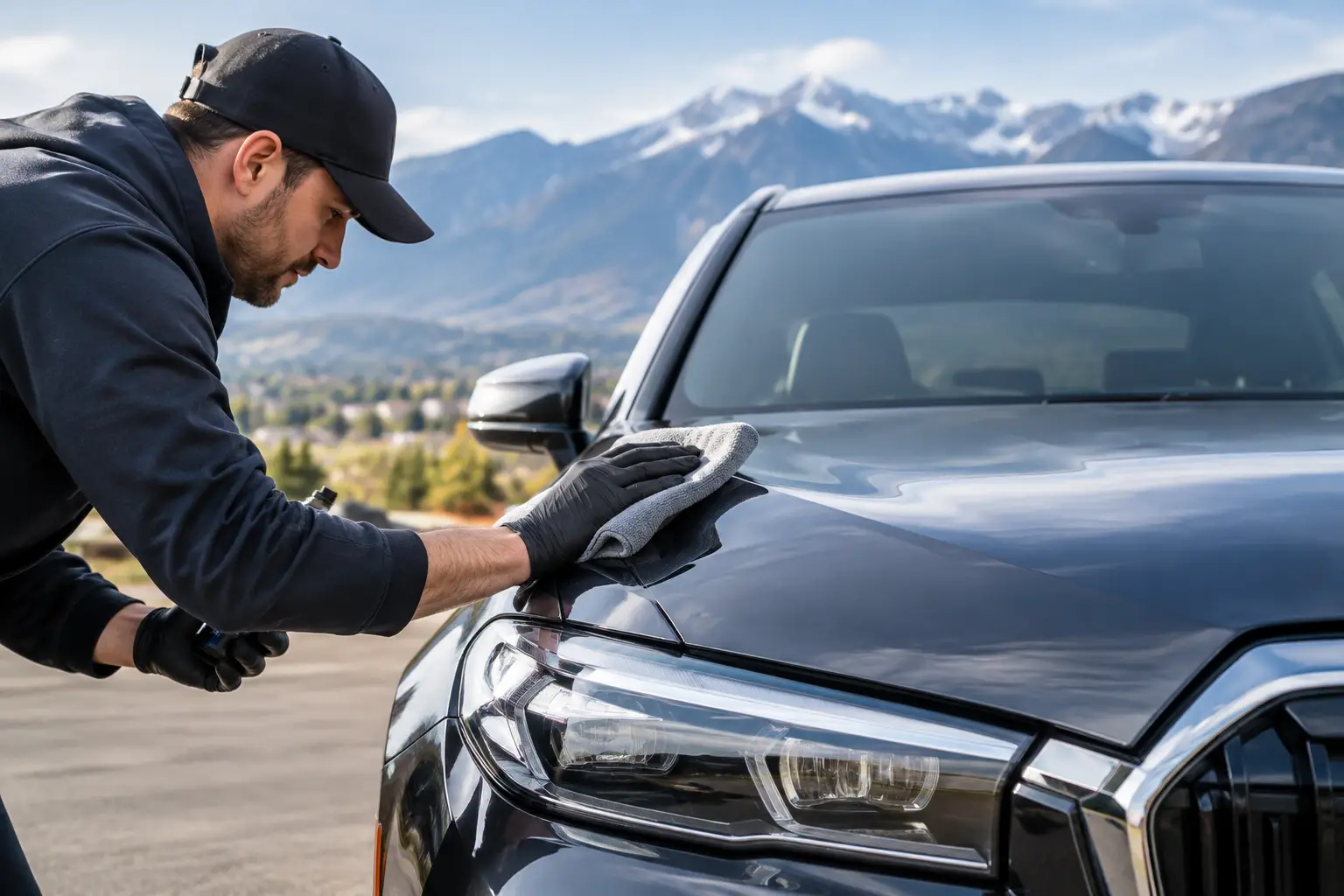
Ceramic Coating Maintenance Guide for Denver Cars
A ceramic-coated vehicle should make Colorado driving easier on your paint, not give you one more complicated chore. This ceramic coating maintenance guide explains how to preserve the deep gloss, water-beading performance, and UV resistance you paid for while dealing with Denver sun, winter road salt, construction dust, and everyday parking-lot grime.
Ceramic coating is a durable layer of chemical protection bonded to your vehicle’s clear coat. It helps contaminants release more easily during washing and creates the slick, hydrophobic behavior that sends water rolling off the surface. It is not bulletproof armor, though. Rock chips, deep scratches, automatic car-wash brushes, and neglected contamination can still affect the finish underneath.
Start With the Coating’s Curing Period
The first days after installation matter more than most owners realize. A professionally installed ceramic coating needs time to cure fully, and the exact timeline depends on the coating system, weather, and installer’s instructions. In general, avoid washing the vehicle for at least several days after application. Keep it out of sprinklers when possible, and promptly blot away bird droppings, bug residue, or water spots rather than rubbing them across the paint.
Denver’s weather can make this period less predictable. A sudden shower does not automatically ruin a coating, but mineral-heavy water left to dry in direct sun can leave stubborn spots on any protected surface. If the vehicle gets wet early in the cure period, gently dry it with a clean, plush microfiber towel. Do not use quick-detail sprays, waxes, or abrasive cleaners unless your detailer has confirmed they are compatible with the coating.
Wash on a Schedule That Fits How You Drive
For most daily drivers, washing every two to four weeks is a practical starting point. Vehicles that spend long hours outside, travel mountain highways, carry kids and pets, or regularly drive through construction areas may need attention more often. The goal is not to chase a perfectly clean vehicle every day. It is to prevent grime from sitting on the coating long enough to bond, stain, or reduce its water behavior.
Road salt deserves faster action. After snowy or icy conditions, rinse the vehicle as soon as practical, including the lower doors, wheel arches, rocker panels, wheels, and rear hatch area. Salt buildup is especially hard on unprotected metal components and can create a dull film on coated paint. Ceramic coating helps with cleanup, but it does not make salt harmless.
A touchless rinse is useful between full washes when the vehicle is lightly dusty. For heavier soil, a proper hand wash is the better choice. The safest process begins with a thorough rinse or foam pre-soak to loosen grit, followed by a pH-neutral car shampoo and clean wash media. Use separate towels or mitts for wheels and paint. Wheels collect brake dust and road debris that should never be transferred to the clear coat.
The Right Wash Technique Protects the Finish
The biggest risk to a ceramic-coated vehicle is often not the weather. It is improper washing. Dry wiping dust from the hood, using a stiff brush at a self-serve wash, or running through a tunnel wash with dirty spinning brushes can create swirls and fine scratches. Coating can add gloss and reduce friction, but it cannot prevent abrasion from dirty contact.
Wash from the top down, since lower panels carry the heaviest contamination. Rinse your wash mitt frequently, use light pressure, and let the shampoo provide lubrication rather than scrubbing at a stubborn spot. If bugs or tree sap do not release easily, soften them first with a coating-safe cleaner and a little dwell time. More force is rarely the answer.
Drying matters just as much. Use a dedicated, high-quality microfiber drying towel or filtered air blower. Pat or glide the towel gently over the surface instead of pressing hard. If you use a drying aid, choose one made specifically for ceramic coatings. Products containing heavy waxes, fillers, or silicone can leave residue that masks the coating’s hydrophobic behavior and makes future maintenance less predictable.
Avoid Products That Work Against Your Coating
Ceramic-coated paint does not need traditional wax to stay protected. Some waxes are compatible, but applying them out of habit can change the surface behavior you are trying to monitor. A coated vehicle is easier to maintain when the product routine stays simple and purposeful.
Avoid household dish soap, harsh degreasers, abrasive polishes, and strong acidic or alkaline cleaners unless they are specifically intended for automotive use and coating-safe at the recommended dilution. These products can leave residue, dry out trim, or weaken the performance of topper products. They may not immediately remove a professional-grade coating, but repeated misuse can make it seem as though the coating has failed.
Be careful with drive-through car washes as well. A touchless wash can be a reasonable option when time is limited, especially for a light rinse after winter driving. However, their chemicals can be stronger than a maintenance wash, and they may not clean road film as thoroughly as a careful hand wash. Brush-style automatic washes are the higher-risk option because they can install swirls quickly, even on newer paint.
Remove Contaminants Before They Become Problems
Ceramic coating makes bird droppings, bug splatter, pollen, and tree sap easier to remove, but it does not stop these contaminants from landing on the vehicle. Bird droppings and bug remains can be acidic. Tree sap can harden in the sun. Leaving either in place for days is an avoidable gamble, particularly on dark paint or a vehicle parked outdoors.
Keep a clean microfiber towel and a coating-safe detail spray in the vehicle for fresh messes. Spray the affected area, let the product loosen the contamination, and lift it away gently. Do not scrub a dry towel over the panel. If the residue has baked on, schedule a proper wash instead of trying multiple aggressive cleaners in the driveway.
Water spots are another common Colorado concern. They are often minerals left behind after irrigation, rain, or a rinse dries in the sun. Fresh spots can usually be addressed with a coating-safe water-spot remover. Older etched spots may require professional polishing, which should be performed carefully to preserve as much coating as possible. Parking away from active sprinklers is a simple habit that saves time later.
Restore Hydrophobic Performance the Right Way
When water stops beading dramatically, many owners assume the ceramic coating is gone. Often, the coating is still intact but covered by mineral deposits, traffic film, or embedded contamination. Beading is useful, but it is not the only measurement of protection. A properly cleaned coating may sheet water quickly rather than form tight beads, and that can still be a good result.
Start with a thorough maintenance wash. If the paint still feels rough or the water behavior remains weak, the surface may need a professional decontamination treatment. This can remove bonded fallout, minerals, and other residue without unnecessary polishing. In some cases, a compatible ceramic maintenance product can refresh slickness and water behavior, but it should supplement proper cleaning, not cover up neglected paint.
Professional maintenance is especially worthwhile before winter, after a hard season of mountain driving, or when the finish no longer looks as clean and reflective as it should. A detailer can assess whether the issue is surface contamination, coating wear, water-spot etching, or actual clear-coat damage. Those problems have different solutions.
Protect the Details Beyond the Paint
A complete ceramic-coating maintenance plan includes the surfaces around the paint. Clean wheels regularly to prevent brake dust from baking on. Keep door jambs, fuel doors, badges, and trim free of buildup. Use appropriate cleaners for glass, rubber, matte finishes, and interior surfaces rather than assuming one product fits every material.
If your coating package included wheel, glass, trim, or interior protection, ask how those surfaces should be maintained. Glass coatings, for example, benefit from clean wiper blades and can perform poorly if washer fluid residue or road film accumulates. Interior protection helps with spills, but prompt cleanup is still the best defense against dyes, oils, and odors.
Your vehicle does not need to be treated like a show car to look exceptional. Consistent, careful maintenance is what keeps ceramic protection working through Denver’s changing seasons. When you are unsure whether a spot, scratch, or loss of water behavior needs attention, a professional inspection can prevent a small issue from becoming a costly correction later.


