
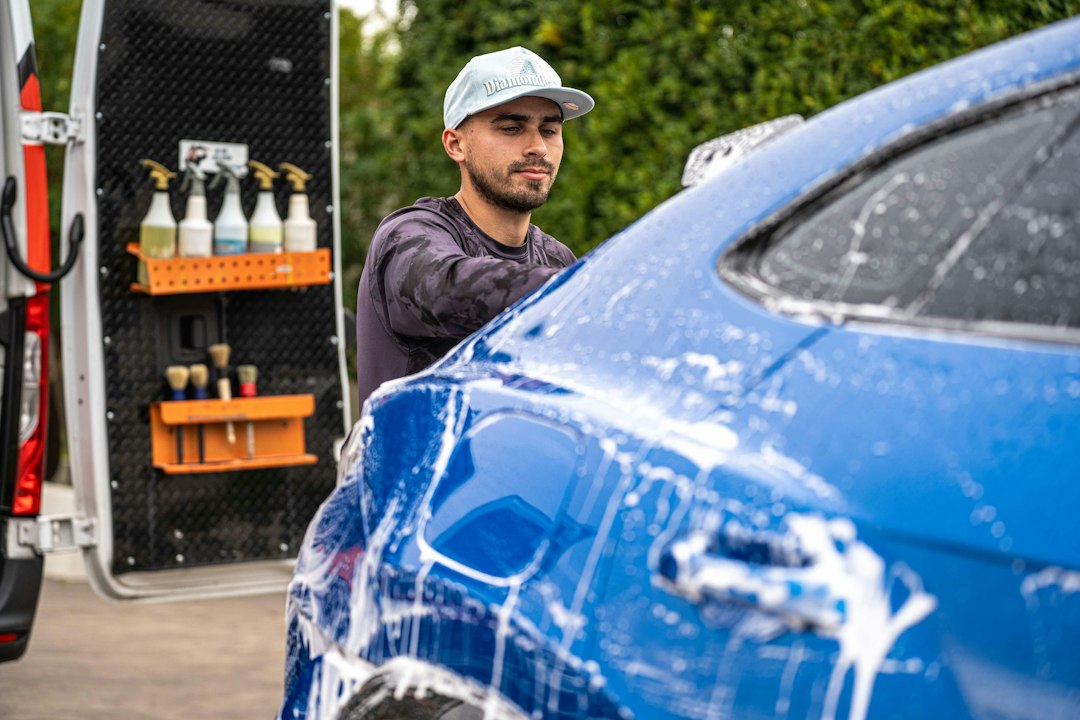
2026 Guide to Mobile Detailing in Denver and Why It Beats the Traditional Valet
If you own a vehicle in Denver, you already know the city is hard on paintwork. At 5,280 feet above sea level, the air is thinner, UV radiation is more intense, temperature swings between seasons are dramatic, and winter brings snow, ice, and road treatment conditions that test every system in a vehicle simultaneously. Most drivers respond by taking their car through an automated tunnel wash and calling it done. The problem is that approach barely scratches the surface, pun intended.
Mobile detailing in Denver takes a completely different approach. A qualified technician arrives at your home or workplace, fully equipped, and delivers professional-grade care without you moving an inch. In 2026, the category has matured into one of the most practical vehicle care decisions a Denver resident can make. This guide explains what mobile detailing actually covers, how it stacks up against the traditional drive-to-a-valet model, and how to decide which service tier makes sense for your situation.
Key Takeaways
-
Denver’s environment is uniquely destructive to vehicles: UV intensity increases by approximately 8-10% for every 1,000 feet of elevation gain, meaning Denver vehicles receive roughly 40-50% more UV exposure than vehicles in sea-level cities, before accounting for Colorado’s 300 days of annual sunshine. Protect your clear coat proactively, or plan to pay for paint correction later.
-
Mobile detailing is competitively priced: A mobile detail costs an average of $158 for a basic package, $278 for standard, and $443 for premium, based on analysis of 89 operators across major U.S. metros. That range is comparable to dropping your car at a shop, but the service comes to you.
-
Regular detailing protects your resale value in a measurable way: Car detailing can increase the trade-in value of your car by 10% or the private-selling value by 9%, which, depending on the total value of your car, could leave you pocketing $1,400 or more, minus the cost of the detail. If you plan to sell or trade in within the next few years, regular detailing effectively pays for itself.
-
Magnesium chloride is a real and ongoing threat: Research from AAA has revealed a staggering $3 billion annual toll on U.S. drivers due to rust damage from de-icing methods, including magnesium chloride. Schedule a thorough post-winter detail every spring to neutralise residue before corrosion takes hold.
-
Ceramic coating lasts years, not weeks: Ceramic coatings typically last between 2 to 4 years when applied correctly, making them significantly more durable than traditional waxes, which usually need reapplication every few weeks. For Denver’s UV intensity, a ceramic coating applied by a mobile detailer is one of the most cost-effective protective decisions you can make.
Quick-Start Prioritisation Framework
| Service | Best For | Effort Level | Time to Results |
|---|---|---|---|
| Basic mobile detail (exterior wash + interior vacuum) | Maintenance between full details | Low | 1-2 hours |
| Full interior and exterior detail | Post-winter cleanup, pre-sale prep | Medium | 3-5 hours |
| Ceramic coating application | Long-term UV and corrosion protection | High (prep intensive) | 1-2 days |
| Paint correction + ceramic combo | Older vehicles with oxidation or swirl marks | High | 2-3 days |
| Engine bay clean (add-on) | Vehicles driven on salted or muddy roads | Low | 30-60 minutes |
Start here if you are:
-
A daily commuter: A full interior and exterior detail every 3-4 months keeps residue from compounding and protects against routine wear.
-
Preparing to sell or trade in: Book a full detail plus a light polish at minimum, the financial return typically far outweighs the cost.
-
New to Denver or just bought a used vehicle: A thorough inspection detail from a qualified mobile provider helps you understand the condition of your paint and interior before Colorado’s weather compounds any existing damage.
This footage of a mobile detailer’s working day in 2026 gives a grounded sense of how a typical job unfolds from first call to final inspection.
What Denver’s Environment Actually Does to Your Vehicle
UV Radiation at Altitude
Denver sits at exactly one mile above sea level. That altitude changes everything about how the sun affects your vehicle. The sun’s ultraviolet rays gradually break down the molecular bonds in a car’s paint, causing it to fade, oxidise, and lose its lustre, a process that is especially prevalent on horizontal surfaces like the hood, roof, and trunk lid.
The maths here matter. UV exposure accounts for 40-50% of all car interior fading, and in Denver, that process happens faster than almost anywhere in the continental United States. That means your dashboard, leather seats, and fabric upholstery are all degrading more quickly than they would in a lower-altitude city, even if you park in the shade part of the day. UV rays are significantly stronger above 5,000 feet, which means your clear coat breaks down faster than it would at sea level. Cars with faded, oxidised paint are common in this region, even relatively new vehicles that have not been properly protected.
The practical action here: apply UV-protective sealant or ceramic coating at least annually, and do not wait until paint looks dull to act. Prevention is cheaper than correction.
Magnesium Chloride and Winter Road Treatments
Colorado does not rely primarily on rock salt to keep roads clear. Denver’s roads are often covered in magnesium chloride, thanks to the Colorado Department of Transportation’s road de-icer. Mag chloride is a powerful salt that reduces the freezing temperature of snow, keeping roads safe and free from black ice. The problem is what happens to your vehicle in the process.
Magnesium chloride has damaging effects on everything from the paint and trim to the structural integrity of the frame, suspension, body, brakes, and exhaust. Critically, the chemical does not just rinse away like road grime. The chemical accelerates rust formation on metal components, including brake systems, fuel lines, and undercarriages. Its hygroscopic nature allows it to pull more moisture toward the surface as well, keeping the corrosive process active for longer.
The action point is clear: a thorough spring detail, including undercarriage attention, should be non-negotiable for any Denver vehicle owner. Any deposits left over from winter can continue to cause corrosion year-round if not properly removed.

Mobile Detailing vs. the Traditional Valet: A Practical Comparison
Where the Traditional Model Falls Short
The traditional valet or detail shop model asks you to arrange a drop-off, organise alternative transport, and work around the shop’s schedule. For many Denver residents juggling long commutes, remote working schedules, and mountain weekend plans, that is a genuine friction point. You no longer need to spend time driving to and from a detailing shop, waiting for your car to be serviced, or rearranging your schedule. With mobile detailing, the service comes to you, allowing you to continue with your day uninterrupted.
Beyond scheduling, automated tunnel washes carry their own risks. Brushes accumulate dirt particles between cycles. On the wrong vehicle, especially one that just came off a dusty road, that trapped grit acts abrasively, creating micro-scratches and swirl marks over time. Those micro-scratches compound under Denver’s UV exposure, dulling paint faster than it should.
What Mobile Detailing Actually Delivers
A quality mobile detailing session is hand-delivered care, customised to your vehicle’s actual condition. Mobile detailers typically offer a more personalised experience compared to traditional shops. Because they are working directly with you at your location, they can tailor their services to meet your specific needs and preferences.
In my experience, that personalisation makes a genuine difference when it comes to results. A technician working on a single vehicle in your driveway has no incentive to rush the job and every incentive to get the detail right, because they rely on repeat bookings and word-of-mouth referrals. That contrasts with a conveyor-belt-style operation processing dozens of cars per hour.
Pro Tip: When booking a mobile detail for the first time, mention any specific problem areas, pet hair, coffee stains, oxidised trim, or hail-season grit in the door jambs. A good mobile technician will factor these into the service plan rather than following a generic checklist.
Understanding Mobile Detailing Pricing in Denver
What Services Cost in 2026
Mobile detailing in Denver usually runs from around $75 for a basic exterior wash to $300 or more for a full interior-and-exterior detail. National benchmarks from Autodetailer.com’s 2026 mobile pricing study put the averages at $158 for a basic package, $278 for standard, and $443 for premium. Denver-specific pricing sits comfortably within that range for most vehicle types.
Interior details typically run $50-$350, exterior details run $100-$350, and full details range from $150 to $500+, with higher prices for larger vehicles or specialty services like paint correction or ceramic coating. If you drive an SUV or truck, budget towards the higher end of any tier, SUVs and trucks typically cost $50 to $100 more than sedans for the same package, and detailing a three-row SUV can take 30 to 50% longer than a compact car.
Ceramic coating is priced separately and is worth treating as a multi-year investment rather than a one-time expense. House Call Pro’s 2026 detailing pricing analysis notes that entry-level ceramic coatings start around $750 to $1,000, with multi-layer systems ranging from $1,500 to $2,500 or higher.
Getting the Most From Your Investment
I’ve found that the best way to think about detailing costs is to compare them against the value they protect. Unprotected vehicles lose 15% more value over five years compared to protected ones. For a $40,000 vehicle, that is $6,000 in lost value, far more than the cost of professional detailing services. Seen through that lens, a $250 full detail every three months costs around $1,000 per year and potentially safeguards thousands in resale value.
Pro Tip: Pair your annual post-winter detail with a ceramic sealant application. The timing is ideal, mag chloride residue is cleared, paint is prepped, and the fresh coating goes on to shield against summer UV from the start of the season.
Ceramic Coating and Paint Protection in Denver
Why Standard Wax Is Not Enough at Altitude
Traditional carnauba wax has always been a short-term solution. In Denver, it is even more limited. Carnauba wax provides minimal UV resistance and breaks down within weeks of sun exposure, while synthetic paint sealants offer moderate protection lasting several months before degrading and leaving paint vulnerable. At Denver’s UV intensity, that breakdown happens faster than the manufacturer’s estimates, which are usually based on sea-level conditions.
Ceramic coatings can last anywhere from 2 to 4 years, sometimes even longer with proper maintenance. This resilience is a significant advantage for those who desire long-term protection without the hassle of frequent applications. Traditional carnauba wax, in contrast, typically lasts just a few weeks, necessitating regular touch-ups every month or so.
What Ceramic Coating Provides for Denver Vehicles
A professionally applied ceramic coating bonds directly to your vehicle’s clear coat at a molecular level, rather than simply sitting on top of it. This is especially critical along Denver’s Front Range, where high-altitude UV radiation is significantly more intense than at sea level, accelerating paint oxidation, clear coat fading, and plastic trim degradation far faster than in lower elevation climates.
One of the most noticeable advantages of ceramic coating is its hydrophobic performance. Water, dirt, and grime bead up and slide off the surface, making the vehicle easier to clean and reducing the frequency of washes. In Denver’s dusty spring and gritty winter conditions, that self-cleaning behaviour is a practical everyday benefit, not just a cosmetic one.

Teams like FB Mobile Auto Detailing offer ceramic coating as a mobile service, meaning the application comes to your driveway without you needing to leave the vehicle at a shop for days.
Pro Tip: Vehicles with existing oxidation or swirl marks should have a paint correction step done before ceramic coating is applied. Coating over damaged paint seals the imperfections in permanently. A reputable mobile detailer will assess this during the initial inspection and advise accordingly.
Building a Seasonal Detailing Schedule for Denver
Spring: Post-Winter Recovery
This is the most critical detail of the year for any Denver vehicle. Magnesium chloride must be washed immediately from cars and trucks, including the undercarriages, to prevent corrosion of electrical wires, nuts, brake shoes, and even ball joints. A spring mobile detail should include a thorough exterior wash, undercarriage rinse, clay bar treatment to remove bonded contaminants, and a protective sealant or coating application.
Summer: UV and Hail Season Protection
The summer phase, from June through August, brings high heat and intense UV exposure. These factors impact vehicle cooling systems and can degrade interior materials. Interior detailing in summer should include UV-protective conditioning for leather and vinyl, and window treatment to reduce solar heat transfer to dashboards and seats.
Hail is also a genuine risk in the Denver metro from late spring through summer. While detailing cannot prevent hail damage, a regular detail helps maintain clear coat integrity, which in turn determines how well your paint weathers any surface impact.
Autumn and Winter: Preparation and Protection
Before winter road treatments begin in earnest, a full exterior detail followed by a sealant application gives your paint a protective barrier heading into the harshest season. During winter, a basic mobile wash every two to three weeks, if weather and temperature permit, reduces the time mag chloride spends in contact with paint and metal surfaces.
After years of helping vehicle owners understand this cycle, the pattern is consistent: those who detail seasonally spend less on paint correction and touch-up repairs in the long run.
Common Mistakes Denver Drivers Make With Vehicle Care
Skipping the Spring Detail
The single most common mistake I see is treating the first warm day in March as the end of winter care, rather than the beginning of spring recovery. Mag chloride residue does not disappear with a light rain shower. The destructive power of road salt extends far beyond simple surface contamination. When salt solutions come into contact with a car’s paint, they begin a complex chemical process that can permanently damage the protective coatings designed to preserve the vehicle’s appearance and structural integrity. A professional mobile detail is the right tool for the job, not a self-service bay.
Treating Automated Tunnel Washes as Maintenance
Automated washes clean the surface but provide no protection, and can actively cause micro-damage through brush friction. Professional car detailing provides up to 10x longer-lasting results compared to basic car wash services, while preserving up to 15% more resale value through superior paint protection and interior preservation. If automated washes are your only strategy, budget for more frequent paint correction as the surface deteriorates faster than it should.
Neglecting the Interior
Denver’s UV exposure affects interiors as aggressively as exteriors. UV is the number one cause of interior fading, leather degradation, and plastic brittleness. Cracked dashboards and faded upholstery are not just cosmetic problems; they reduce perceived value significantly when it comes time to sell. A bi-annual interior detail with UV protectant application is a straightforward way to prevent this.
Frequently Asked Questions
How does mobile detailing differ from a drive-through car wash?
A drive-through car wash removes surface dirt in a few minutes using automated brushes or jets. Mobile detailing is a hands-on service performed by a technician who works through every panel, surface, and material in your vehicle using professional-grade products and techniques. Research indicates that vehicles treated with a ceramic coating can experience up to a 60% longer lifespan of their paint finish compared to those that receive only periodic washing. In addition to providing enhanced resistance to physical abrasion and chemical degradation, these coatings also simplify future cleaning efforts, as contaminants are less likely to adhere to a protected surface. The two services are in different categories entirely.
How much does mobile car detailing in Denver typically cost?
Mobile detailing in Denver usually runs from around $75 for a basic exterior wash to $300 or more for a full interior-and-exterior detail. Speciality services such as paint correction, ceramic coating, or headlight restoration are priced separately on top of a base package. Vehicle size also affects the final price, with larger SUVs and trucks costing $50-$100 more than a standard sedan for equivalent work.
How often should a Denver vehicle be professionally detailed?
In my experience working with Colorado vehicle owners, a full interior and exterior detail every three to four months is the right cadence for most daily drivers. At minimum, a post-winter detail in spring and a pre-winter protection detail in autumn will address the two highest-risk periods in the Denver climate calendar. Vehicles parked outdoors year-round or driven on I-70 mountain routes during winter may benefit from more frequent attention.
Does professional detailing genuinely increase resale value?
The data on this is consistent. The trade-in values of vehicles increased an average of 10%, which translated to an average increase of $1,666 in cars in ‘Excellent’ condition versus ‘Good’ condition. The private sale values increased an average of 9%, translating to an average increase of $1,772. A full professional detail before listing or trading in a vehicle is one of the highest-return activities a seller can undertake, especially in a market where buyers make quick decisions based on first impressions.
Is mobile detailing available year-round in Denver?
Most mobile detailing services in the Denver metro operate year-round, with some weather-related adjustments in the depths of winter. Certain services, such as ceramic coating application, require specific temperature and humidity conditions to cure correctly, so winter timing may be more limited for those treatments. Basic wash, interior detail, and conditioning services can typically be performed in most conditions. Booking ahead during spring post-winter season is advisable, as demand spikes significantly in March and April.
Sources
-
Mobile Detailing Prices 2026, Autodetailer.com. Analysis of 89 mobile detailing operators across four major U.S. metros. https://autodetailer.com/mobile-detailing-prices-2026/
-
Car Detailing Prices 2026, House Call Pro. Industry pricing guide covering mobile and in-shop detailing nationally. https://www.housecallpro.com/resources/how-much-to-charge-for-car-detailing/
-
Top Mobile Detailers in Denver, Colorado, Whirlocal. Local service pricing and provider roundup. https://whirlocal.io/content/top-12-best-mobile-detailers-in-denver-colorado/
-
Denver Car Interior Protection, Extreme AW. UV exposure data at Denver’s elevation. https://extremeaw.com/interior-protection/
-
How to Stop Road Salt from Ruining Your Car, Autowash Colorado. AAA research on mag chloride vehicle damage. https://www.autowashco.com/post/magnesium
-
How Colorado’s Climate Affects Auto Paint, Yoder Collision Network. Colorado-specific paint damage and repair guide. https://yodercollisionnetwork.com/auto-body-repair/how-colorados-climate-and-weather-impact-auto-paint-signs-and-signs-and-repairs/
-
Mile High Car Care Guide, Mobile Mechanic Pros of Denver. Altitude effects on vehicle systems. https://www.mobilemechanicprosofdenver.com/mile-high-car-care-denver-mobile-mechanic-tips-for-altitude-and-snow
-
Car Detailing Increase Resale Value, Fort Worth Auto Detail. Kelley Blue Book-based study on detailing ROI. https://www.fortworthautodetail.com/how-much-car-detail-increases-car-value
-
Ceramic Coating vs. Traditional Wax, 14/69 Super Center. Longevity and protection comparison. https://www.1469supercenter.com/ceramic-coating-vs-wax-comparing-longevity-and-protection-for-your-car
-
Paint Correction Denver, Colorado Auto Spa. UV and ceramic coating protection for Front Range vehicles. https://www.coloradoautospa.com/Paint-correction-Arvada-Boulder-Castle-Rock-Denver
-
Car Detailing vs Car Wash, Total Package Detailing. Research on paint protection and resale outcomes. https://www.totalpackagedetailing.com/car-detailing-vs-car-wash/
-
AAA Road Salt Vehicle Damage Study, CT Post / AAA. $3 billion annual toll data. https://www.ctpost.com/local/article/AAA-Road-salt-damage-eating-up-our-vehicles-10947162.php
-
FB Mobile Auto Detailing, FB Detailing and Coating. Denver-area mobile detailing and ceramic coating services. https://www.fbdetailingandcoating.com/


