
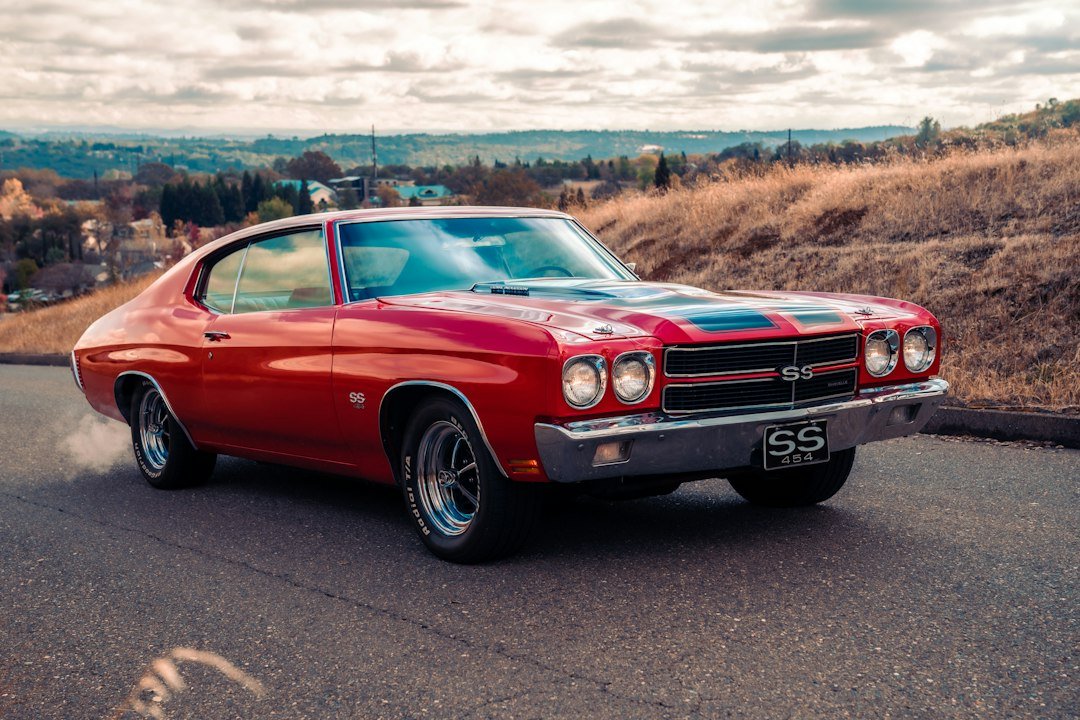
Restore a Classic Car’s Paint Without Ruining Its Value — What Denver Owners Need to Know
If you own a classic car in Denver, you already know the city is beautiful but hard on paint. Summers bring relentless UV radiation at mile-high altitude. Winters bring magnesium chloride de-icers that cling to bodywork and find every chip or crack they can. And if you own something rare, a first-generation muscle car, a chrome-bumpered American classic, or a matching-numbers survivor, the wrong paint decision can erase thousands of dollars of value in a single afternoon.
The good news is that most classic cars do not need a full respray. The right process for classic car paint restoration in Denver starts with an honest assessment of what you actually have, followed by targeted correction that removes as little material as possible. I have worked through these decisions with owners many times, and the core principle never changes: preserve first, correct cautiously, protect diligently.
This guide walks you through every step, from reading your paint’s condition to choosing the right protection for Colorado’s brutal environment.
Key Takeaways
-
Original paint commands a premium: According to research published by DentAdvisor, vehicles with original factory paint sell for 5-15% more than comparable vehicles with aftermarket paint, for rare classics, the gap can be tens of thousands of dollars. If your original paint is salvageable, save it.
-
Denver’s altitude multiplies every risk: Multiple local sources confirm that at 5,280 feet, UV radiation is roughly 25% more intense than at sea level, meaning fading, oxidation, and clear coat failure all happen faster here than in most US cities. Plan your protection schedule accordingly.
-
Single-stage paint requires a completely different approach: Classic car detailing specialists note that most vehicles built before the mid-1980s use single-stage paint with no protective clear coat, making them far more susceptible to damage from aggressive products or techniques.
-
A paint thickness gauge is non-negotiable before any correction: Professional detailers use a gauge to confirm available material before touching the paint, on a classic, this single step separates a successful restoration from an irreversible mistake.
-
Carnauba wax is the safest protection for original classic finishes: Ceramic coating specialists advise that museum-quality collector cars should use wax only, as it is fully reversible and time-proven on vintage finishes.
Quick-Start Prioritisation Framework
| Situation | Recommended Approach | Effort Level | Time to Results |
|---|---|---|---|
| Original paint, light oxidation | Gentle hand polish + carnauba wax | Low | 1-2 days |
| Original paint, moderate swirls | Machine correction with gauge check first | Medium | 2-3 days |
| Repainted car, modern clear coat | Full paint correction + sealant or ceramic | Medium-High | 3-5 days |
| Bare metal corrosion, rust-through | Panel repair before any paint work | High | Weeks |
| Garage queen, rarely driven | Preservation wash + quality wax quarterly | Low | Ongoing |
Start here if you are:
-
A preservation-minded collector: Skip correction entirely, protect what you have with a quality carnauba wax and a thorough decontamination wash. The paint you save is irreplaceable.
-
A driver-quality classic owner: Commission a gauge-guided, single-stage-safe paint correction, then apply a synthetic sealant for longer UV protection between wax coats.
-
Dealing with deteriorated or previously resprayed paint: Get a professional condition assessment first. If original paint is gone, you have more correction latitude, but still match the original colour for value reasons.
Step 1, Assess What You Actually Have Before Touching Anything
The single most important step in classic car paint restoration in Denver has nothing to do with a polishing pad. It is understanding exactly what you are working with before any product touches the surface.
Identify Your Paint Type
Classic cars built before the mid-1980s typically use single-stage paint with no separate clear coat, requiring gentler correction techniques. This matters enormously. Classic cars built before the mid-1980s almost universally use single-stage paint, and when you polish single-stage paint, you are cutting directly into the colour itself. There is no protective clear layer acting as a buffer.
The simplest field test: apply a small amount of polish to a clean cloth and rub it on an inconspicuous spot. If the cloth picks up colour, the paint is single-stage. A modern clear coat car leaves only clear residue on the cloth.
Measure Before You Correct
Before any paint correction or ceramic coating, a professional detailer reaches for a paint thickness gauge, that number, in microns or mils, determines what is possible, what is safe, and what the car has already been through.
A professional 1-step or 2-step paint correction typically removes between 1 and 3 microns of clear coat out of a total factory thickness of 35 to 50 microns. On a classic with single-stage paint, those microns come directly out of the colour layer. If the paint is already thin from decades of Colorado sun, even a light correction pass can burn through to primer, an irreversible outcome.
Pro Tip: If you notice colour transferring to your polishing pad during correction, stop immediately. Classic car detailing guides are clear: colour on the pad means you are removing paint. Reassess your compounds and pad selection before continuing.
Understand the Value Equation
In my experience, Denver owners often underestimate how much a car’s originality is worth to buyers and insurers. For collectible vehicles enthusiast cars, and luxury vehicles, original paint is critically important, a classic car with original paint, even if faded, is often worth more than a perfectly restored example with aftermarket paint.
The difference between original paint and refinished panels can change a vehicle’s value by thousands or even tens of thousands of dollars. This is a decision worth taking seriously before you book any work.
Step 2, Understand Denver’s Specific Threat to Classic Paint
Classic car paint restoration in Denver demands a Colorado-specific understanding of what you are protecting against. The environment here is genuinely hostile in ways that owners moving from other states often do not anticipate.

The Altitude-UV Problem
At 5,280 feet, Denver receives 25% more UV radiation than sea-level cities. UV is the number one cause of paint oxidation and clear coat breakdown. For a classic car with single-stage paint and no UV-protective clear coat, this is a serious ongoing threat. That means paint fade, clear coat breakdown, and plastic trim deterioration happen faster here than in many other states.
If you are not actively protecting your classic’s finish, the Denver sun is doing permanent damage every day the car sits outside. Apply a quality carnauba wax at minimum every 60-90 days and park under cover whenever possible.
The Magnesium Chloride Winter Threat
Colorado’s roads use a specific winter chemistry that many classic owners overlook. CDOT uses a combination of rock salt (sodium chloride) and a liquid magnesium chloride solution on Colorado roads. Modern Colorado road treatments use magnesium chloride, which sticks to surfaces, stays active for days, attracts moisture, and accelerates oxidation.
For a classic car with single-stage paint and any existing stone chips or scratches, this is particularly dangerous. If you have a tiny ding or chip on the paint job, magnesium chloride can seep into the body of your car and begin to rust. Classic owners should wash the car within 48 hours of any winter driving and inspect the lower panels and rocker sills closely each spring.
The Freeze-Thaw Cycle
Colorado vehicles face a constant battle against extreme weather conditions, the state’s unique combination of high altitude, powerful UV rays, low humidity, hailstorms, snow, and freeze-thaw cycles puts immense stress on your vehicle’s exterior. Water trapped in existing chips expands when it freezes, widening chips and lifting paint edges. Address every paint chip promptly with a matched touch-up, prevention is far cheaper than repair.
This footage shows how chemical dipping strips paint and rust back to bare metal, which helps illustrate why a full strip-down is sometimes the only honest starting point for a heavily deteriorated classic.
Step 3, Choose the Right Correction Level
Once you understand your paint type and thickness, the next decision is how aggressively to correct. I have found that most classic owners benefit most from conservative, targeted correction rather than chasing perfection.
Preservation: Touch as Little as Possible
A preservation-focused approach retains as much original material as possible, paint may be carefully corrected rather than replaced. For a rare survivor or a car with strong collector value, this is the right path. Light oxidation on single-stage paint often responds beautifully to a mild hand polish formulated for vintage finishes, without touching a machine polisher at all.
Hagerty has described preservation-class cars as vehicles that keep virtually all of their original factory paint in good condition, along with an unaltered interior, original powertrain and wiring. If your car fits this description, a full paint correction is the wrong answer.
Targeted Correction: Fix Problems, Not Everything
For cars with moderate oxidation, swirl marks, or localised defects, a single-stage-aware machine correction is appropriate, with caveats. On single-stage paint that is already thin from decades of exposure, excessive correction can break through to primer or metal, if you notice colour on your polishing pad, you are removing paint and should stop immediately and reassess your approach.
Work panel by panel, measure frequently, and use the gentlest compound that achieves the result. For vehicles that come in with already-thin readings, the conversation shifts from full correction to safe improvement, that is a better outcome than chasing perfection and compromising the paint’s long-term integrity.
Pro Tip: Always use dedicated pads per colour when correcting single-stage paint. Single-stage pigment transfers easily, and a contaminated pad can redistribute colour across adjacent panels.
Full Correction: When the Original Finish Is Already Gone
If the paint has been previously resprayed or is too damaged to salvage through correction, a full professional repaint becomes the responsible choice. Repainting a classic car can decrease its value, particularly if the vehicle is rare or if the work is poorly done, however, if a repaint is necessary due to significant deterioration and is executed well and in line with the original colour and finish, it can maintain or even enhance the car’s value.
Always match the original factory colour code. If maintaining collector value is the priority, preserving or returning to the original colour may deserve greater consideration.
Step 4, Choose the Right Protection for a Classic Finish
After correction, or in lieu of correction if the paint is in good shape, protection is essential. The choice of protection product matters more for a classic car than for any modern vehicle.
Carnauba Wax, The Preferred Choice for Originals
Older finishes, single-stage paint, and classic vehicles often respond beautifully to traditional waxes, which can visually soften minor imperfections while enriching colour, many collectors continue using traditional waxes on vintage vehicles for exactly this reason.
For classic and collector cars carnauba wax is the best choice as it preserves the original paint and can be removed anytime. The reversibility is critical: if you want to do further correction later, wax comes off cleanly. Ceramic coating does not.
In Denver’s UV environment, plan to reapply a quality carnauba wax every 60-90 days on a driven classic, or at least quarterly on a garaged car. Carnauba wax typically lasts 1-3 months. This is more frequent than national advice suggests, because Denver’s altitude genuinely accelerates breakdown.
Paint Sealant, A Practical Middle Ground
Paint sealants typically last 3-6 months. For a classic that sees regular use, a synthetic sealant applied over a corrected finish offers meaningfully better UV and chemical resistance than wax alone, while remaining fully removable. This is a solid choice for a driver-quality classic that is not in concours condition.
Ceramic Coating, Use With Caution on Originals
Ceramic coating will not damage classic paint, but removing it later requires machine polishing, which removes additional material from already-thin paint. Ceramic coating specialists paint can safely receive a full ceramic coating, but vehicles with original lacquer or single-stage paint should be tested first, traditional carnauba wax is often the safer choice for preserving originality.
If you opt for ceramic coating on a resprayed classic that sees regular Denver use, the UV-blocking chemistry does offer genuine advantages at altitude. Ceramic coating repels water resists UV, blocks chemical etching from road salts and bird droppings, and makes your paint dramatically easier to clean. Just be sure the correction work is complete before the coating goes down, ceramic locks in whatever the paint looks like on application day.
Pro Tip: For a classic you drive occasionally through Denver winters, a quality synthetic sealant applied in October, before the magnesium chloride season begins, gives you a protective layer that wax alone cannot match in cold-weather durability. Reapply in April after a thorough decontamination wash.
Common Mistakes That Cost Denver Classic Owners Money
I have seen the same errors repeated over and again, and most of them are avoidable with a little advance knowledge.
Using Modern Products on Vintage Paint
The biggest mistake is treating a classic car like a modern vehicle, products formulated for contemporary clear coats, synthetic leathers, and durable plastics can devastate vintage materials. Always check that your shampoo, polish, and protection products are suitable for single-stage paint.
Skipping the Thickness Check
No reputable specialist should touch a classic for correction work without first measuring paint thickness panel by panel. Polishing through thin clear coat exposes the base coat and destroys the finish permanently. On single-stage paint, there is no base coat underneath, there is primer or bare metal. If a detailer cannot explain how they will assess your paint thickness before beginning, that is a warning sign.
Going to an Automatic Car Wash
Automatic car washes cause scratches. On aged single-stage paint, the micro-scratches inflicted by automated brush wash systems accumulate into visible swirl damage that requires machine correction to remove, correction that costs more material from an already-thin finish. Hand washing with a pH-balanced classic car shampoo is the only appropriate method.
Delaying Chip and Scratch Repair Through Winter
Every unaddressed paint chip on a classic becomes a potential rust site the moment Denver’s magnesium chloride season begins. Salt begins attacking your paint and undercarriage within days of exposure. Touch up every chip with matched paint before winter, and wash the car thoroughly within 48 hours of any road-salt exposure.

Working With a Specialist in Denver
Classic car paint restoration in Denver rewards owners who seek out specialists with genuine experience on vintage finishes. The skills and product knowledge required for a 1967 Camaro are genuinely different from those needed for a modern daily driver.
When evaluating a detailer or restoration specialist, ask specifically whether they use a paint thickness gauge before correction work, whether they have experience with single-stage paint, and what products they recommend for protection after the work is complete. A knowledgeable specialist will have clear answers to all three questions.
FB Mobile Auto Detailing brings that kind of vehicle-specific care to classic owners across the Denver metro area, with mobile service that means your irreplaceable car never has to sit in an unfamiliar shop. For a garaged classic, having a trusted specialist come to you is simply the lower-risk option.
Keeping a restoration log and documenting every product used and every treatment carried out adds provenance and increases buyer confidence if the car is ever sold. Ask your specialist to provide this documentation as part of any restoration service.
Frequently Asked Questions
Does repainting a classic car always reduce its value?
Repainting can affect value where a car retains particularly good, historically important, or highly original factory paint. However, if a repaint is necessary due to significant deterioration, and is executed well and in line with the original colour and finish, it can maintain or even enhance the car’s value. The key variables are whether the original paint was present and whether the new work was done correctly in the right colour.
How often should I wax my classic car in Denver?
Standard national advice recommends waxing twice a year, but Denver’s altitude changes the calculation. At 5,280 feet, Denver receives 25% more UV radiation than sea-level cities, meaning a carnauba wax that lasts three months at sea level may need reapplication every 60 days on a car that sits outside regularly. At minimum, wax before summer and before winter, and add a third application mid-summer for driven cars.
Is ceramic coating safe for my classic’s original paint?
Ceramic coating specialists paint can safely receive a full ceramic coating, but vehicles with original lacquer or single-stage paint should be tested first, museum-quality collector cars should use wax only, and a professional paint assessment is recommended before any coating is applied to vintage finishes. The concern is not damage during application but removal: getting ceramic coating off later requires machine polishing that removes additional paint material.
How do I know if my classic still has its original paint?
Careful inspection around trim seals, hardware, and concealed corners often reveals whether a classic car still carries its original paint or received restoration work somewhere during its lifetime. A paint thickness gauge is the most reliable tool, factory-applied paint is generally consistent in thickness, with only minor variations between panels, and if you notice one panel measuring double the thickness of another, it has likely been repainted or repaired.
What should I do before winter to protect my classic’s paint in Denver?
Before adding protection, remove what is already there, a proper wash plus clay bar removes bonded summer contaminants, pollen, tree sap, brake dust, and road tar so the protection layer adheres directly to clean paint. Follow this with a quality synthetic sealant for winter. If you drive the car through any weather involving de-icers, wash it thoroughly within 48 hours. Store indoors or under a breathable cover for the season whenever possible.
Sources
-
Why Factory Paint Matters More Than You Think, DentAdvisor. Original paint value research and collector premium data. https://dentadvisor.org/blog/factory-paint-importance
-
PDR vs Repaint for Hail Damage in Denver, CityDesk Denver. UV radiation at Denver’s altitude and paint durability. https://citydeskdenver.com/automotive/pdr-vs-repaint-denver-hail-damage/
-
Classic Car Detailing Tips for Care & Protection, Nathan’s Detailing. Single-stage paint care and common mistakes. https://nathansdetailing.com/detailing-for-classic-cars-special-considerations-tips/
-
Paint Thickness Gauge: What the Numbers Mean, Gilroy Blackout. Paint gauge readings, factory thickness, and correction limits. Professional detailers
-
Classic Car Ceramic Coating: Vintage Paint Protection, Gilroy Blackout. Wax vs. ceramic for classic finishes. Ceramic coating specialists
-
Classic Car Paint Correction: Complete Vintage Guide, Gilroy Blackout. Single-stage correction technique and oxidation restoration. Ceramic coating will not damage
-
Professional Ceramic Coating in Denver, CO, Extreme AW. UV radiation data at Denver altitude and ceramic protection. https://extremeaw.com/ceramic-coating/
-
Does Classic Car Painting Decrease Value?, Classic Cars of Sarasota. Repaint quality and collector value impact. https://www.classiccarsofsarasota.com/blog/does-classic-car-painting-decrease-value-debunking-the-myths
-
Does Repainting a Classic Car Affect Its Value?, White’s Body Works. Original paint vs. repaint value considerations. https://www.whitesbodyworks.com/all-about-having-a-classic-car-painted/
-
How to Find Out If a Classic Car Was Repainted, DAX Street. Identifying original paint and collector market impact. https://daxstreet.com/guide/381545/how-to-find-out-if-a-classic-car-was-repainted/
-
Should You Restore a Classic Car or Leave It Original?, Motorious. Hagerty preservation-class definitions and value guidance. https://www.motorious.com/articles/features-3/should-you-restore-a-classic-car-or-leave-it-original/
-
Classic Car Restoration That Protects Value, Echelon Elite. Preservation-focused restoration approach. https://www.echelon-elite.com/post/classic-car-restoration-that-protects-value
-
How Does Paint Correction Restore Clear Coat Without Removing Too Much, KD Auto Spa. Micron removal data and correction levels. https://kdautospa.com/how-does-paint-correction-restore-your-clear-coat-without-removing-too-much-material/
-
How Clear Coat Thickness Limits Paint Correction, EuroLuxe Detailing. Clear coat mechanics and correction planning. https://euroluxedetailing.com/blog/paint-correction-understanding-clear-coat-thickness-limits/
-
Protect Your Car from Road Salt Damage, Colorado Guide, ManCave Detail. Magnesium chloride timeline and protection options. https://mancavedetail.com/protect-your-car-from-road-salt-damage-colorado-guide/
-
Traditional Carnauba Wax and Paint Sealants vs Ceramic Coatings, Collinite. Classic car wax recommendations and product longevity. https://collinite.com/traditional-carnauba-wax-paint-sealants-vs-ceramic-coatings/
-
Paint Correction on Single-Stage Paint, EuroLuxe Detailing. Single-stage correction technique and colour layer risks. https://euroluxedetailing.com/blog/paint-correction-single-stage-clear-coat-vehicles/
-
Vintage Car Paint Restoration: 9 Expert Tips, OZWraps. Documentation, restoration logs, and ongoing maintenance. https://ozwraps.com.au/vintage-car-paint-restoration/
-
Winter Prep: Protect Your Car from Colorado Salt & Snow, Revival Detailing. Decontamination and winter protection process. https://revivaldetailing.com/blog/winter-prep-colorado
-
Car Wax vs Ceramic Coating, Which Paint Protection is Best?, Swiss Vax. Classic car wax recommendations. https://swissvax.us/blogs/news/car-wax-vs-ceramic-coating-which-paint-protection-is-best
- We Proudly serve the following cities and surrounding neighborhoods : Aurora , Cherry Hills Village Greenwood Village Castle Pines Lone Tree Castle Rock Highlands Ranch Centennial Parker Louisville Superior


