
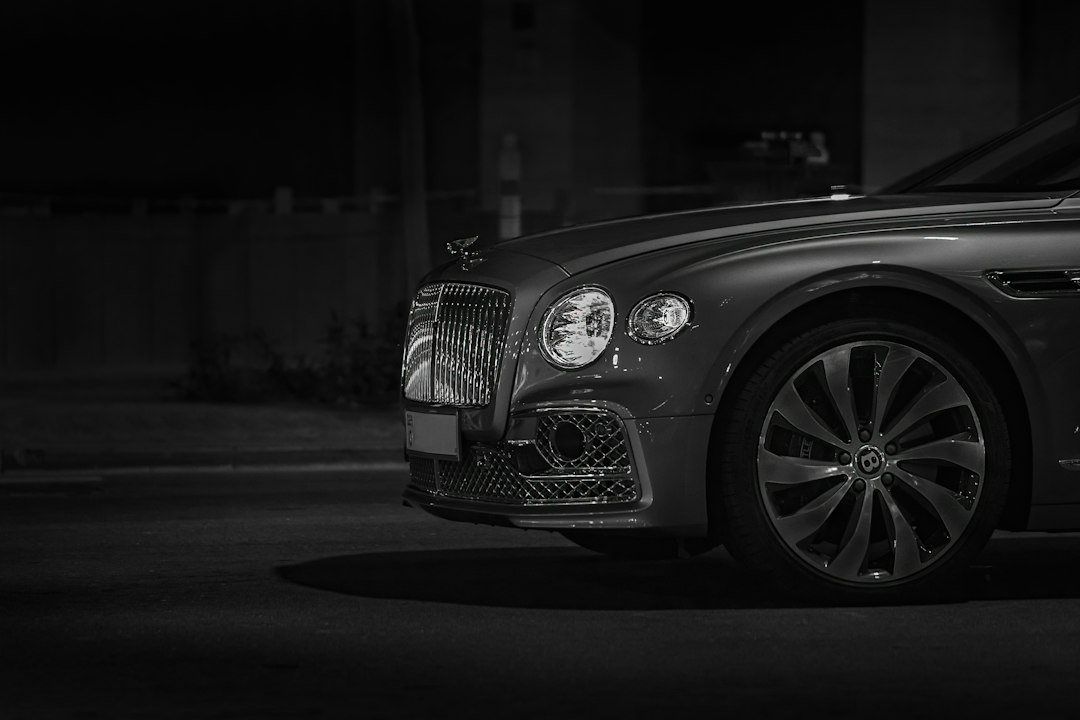
Detailing a Luxury Vehicle More Often Than You Think Is Actually Worth It
If you own a BMW, Porsche, Mercedes-Benz, Lexus, or classic collector car, here is a number worth sitting with: a well-detailed vehicle can see a trade-in value increase of 8% to 12%. On a $80,000 luxury vehicle, that is a potential $6,400 to $9,600 difference at resale, driven by something as manageable as a consistent detailing schedule. In Colorado’s environment, where altitude, hail, magnesium chloride, and temperature swings conspire against your paint from every direction, that schedule needs to be more aggressive than most owners realise.
The conventional wisdom, get your car detailed once or twice a year, works fine for a family estate car that parks in a covered garage and never sees a mountain pass. Luxury and classic car owners face a different reality. In my experience, the owners who are happiest with their vehicles five years down the line are the ones who treat detailing as a maintenance habit, the same way they treat oil changes. This article explains why, and gives you a clear framework for how often to book each service.
Key Takeaways
-
Detailing frequency matters more than most owners think: Luxury vehicles deserve extra attention, with frequent detailing every 2-3 months advisable to ensure they retain their exceptional aesthetic appeal and value. If you are waiting six months between sessions, you are likely accumulating damage that compounds.
-
Colorado’s environment accelerates paint degradation: Colorado Springs sits at roughly 6,000 feet, and according to EPA data cited by industry professionals, Colorado’s high altitude increases UV exposure by up to 33% compared to sea level. Adjust your schedule accordingly, what works in a coastal or low-altitude city is not enough here.
-
Winter road chemicals are a specific threat: Magnesium chloride has damaging effects on everything from the paint and trim to the structural integrity of the frame, suspension, body, brakes, and exhaust. Post-winter detailing is non-negotiable for any vehicle driven on Colorado roads.
-
Regular detailing delivers measurable financial returns: Professional detailing can increase a vehicle’s resale value by 10-20%, translating to hundreds or even thousands of additional dollars per vehicle. Treat the cost as an investment, not an expense.
-
Interior care is equally critical: Leather car seats should be conditioned every two to three months for optimal protection, and in dry climates or with frequent sun exposure, conditioning every eight weeks is recommended. Colorado’s dry air makes this especially relevant.
Quick-Start Prioritisation Framework
| Service | Best For | Effort Level | Recommended Interval |
|---|---|---|---|
| Full exterior detail | All luxury/classic vehicles | Professional | Every 2-3 months |
| Interior deep clean + leather conditioning | Daily-driven luxury vehicles | Professional | Every 2-3 months |
| Post-winter decontamination wash | Any vehicle driven in Colorado winter | Professional | After first major thaw |
| Pre-winter protective sealant | All vehicles parked outdoors | Professional | October/November |
| Paint correction | Vehicles with swirl marks or oxidation | Professional only | Every 12-18 months |
| Ceramic coating refresh/inspection | Ceramic-coated vehicles | Professional | Annually |
Start here if you are:
-
A daily driver: Book a full detail every 2-3 months. If your luxury vehicle is a daily driver, it will naturally accumulate more dirt, dust, and wear, making detailing every 2-3 months ideal.
-
A weekend or occasional driver: A thorough detail every 4-6 months is a reasonable baseline, but you should still schedule a dedicated post-winter decontamination service after Colorado’s road-salt season ends.
-
A classic car or garage-kept vehicle owner: At minimum, detail before and after storage season. High-altitude UV still reaches garaged vehicles through windows and during transit.
Why Colorado Is Particularly Hard on Luxury Paint
High-Altitude UV: The Invisible Enemy
Most luxury car owners understand sun damage in principle. Fewer appreciate just how dramatically altitude amplifies the problem. At higher elevations like Boulder UV intensity rises by about 10-12% for every 1,000-foot increase in elevation, meaning your vehicle’s paint is under more stress here than in lower-altitude regions. Denver sits at 5,280 feet. Drive up to a Vail car park or a Summit County trailhead and you add another 2,000 to 3,000 feet on top of that.
Colorado’s elevation intensifies UV exposure, meaning paint fade, clear coat breakdown, and plastic trim deterioration happen faster here than in many other states. The practical upshot for luxury owners: the wax or sealant protecting your paint degrades faster than the label suggests. A product rated for three months of protection in a lower-altitude city may need refreshing after six to eight weeks on the Front Range. Schedule accordingly.
Pro Tip: If your vehicle parks outdoors at the office during the day, that daily UV exposure adds up faster than a single long weekend trip to the mountains. Even an indoor car cover during working hours can meaningfully reduce cumulative paint stress between details.
Magnesium Chloride and Winter Road Treatments
Throughout Colorado’s winter, road crews deploy magnesium chloride, a compound that improves winter traction but poses a significant threat to your vehicle’s appearance and longevity. The key distinction from ordinary road salt is its liquid form. Magnesium chloride is excellent at corroding precious metals and plastics on your vehicle, and since the substance is liquid, it penetrates nearly every inch of your car’s undercarriage.
Prolonged contact with magnesium chloride can leave painted surfaces dull, and in the case of rock chips or scratches, the introduction and prolonged exposure may result in paint peeling or bubbling, exposing the metal beneath to further corrosion. For a $90,000 vehicle, that kind of damage is both costly and avoidable. The Colorado Department of Transportation recommends removing de-icer residue from vehicles with soap and water following winter weather storms. A professional mobile detailing appointment goes considerably further, addressing not just the surface but the wheel wells, door jambs, and undercarriage areas that a quick rinse misses entirely.
Hail, Temperature Swings, and Freeze-Thaw Cycles
In Colorado, vehicles face a constant battle against extreme weather conditions, with the state’s unique combination of high altitude, powerful UV rays, low humidity, hailstorms, snow, and freeze-thaw cycles putting immense stress on a vehicle’s exterior, leading to noticeable paint damage over time.
In colder months, moisture enters small paint chips and freezes overnight, expanding and breaking down surrounding layers, with repeated freeze-thaw cycles leading to cracking, bubbling, peeling, and eventually rust. This is why a small chip left unaddressed in September can become a rust spot by February. Regular professional detailing includes a paint inspection that catches these vulnerabilities before they escalate.

How Often Luxury Vehicles Actually Need Each Service
Exterior Detailing
I’ve found that the question luxury owners ask most often, “how often is really necessary?”, has a clearer answer than most people realise. For luxury vehicles specifically exterior detailing on a monthly basis is considered appropriate by industry professionals, though this frequency makes most sense for daily drivers and vehicles parked outdoors. A more practical schedule for most Denver-area luxury owners is every 6-10 weeks, which aligns exterior care with Colorado’s seasonal transition points.
Cars regularly parked outside are more exposed to UV rays, bird droppings, sap, and pollution, and these hazards can damage paint and trim, making outdoor-parked vehicles benefit from more frequent detailing than garage-kept ones. Bird droppings are particularly corrosive: their acidity can etch into clear coat in as little as 48 hours in direct sun. If you are parking your Porsche or Land Rover outside on weekdays, that risk accumulates daily.
Interior and Leather Care
Conditioning is essential for replenishing leather’s natural oils and preventing it from drying out; without conditioning, leather can become brittle and prone to cracking, making it a good habit to condition leather seats every 2-3 months to maintain their softness and flexibility.
Colorado’s dry, high-altitude air intensifies this. Leather car seats should be conditioned every two to three months for optimal protection; in dry climates or with frequent sun exposure, conditioning every eight weeks is recommended, and you should never go longer than six months, as leather will already start drying out and losing its suppleness by that point. A professional interior detail is not simply a vacuum and wipe-down. It includes steam cleaning, upholstery extraction, and product application to all leather, wood veneer, and alcantara surfaces.
Pro Tip: Cracked leather on a luxury vehicle significantly reduces its perceived and actual resale value. Replacing a set of cracked Nappa leather seats can cost several thousand dollars. Conditioning every two to three months costs a fraction of that, and a mobile detailing appointment from a specialist like FB Mobile Auto Detailing means you do not even need to leave your driveway.
Paint Correction and Protective Coatings
Comprehensive paint correction and protection is recommended every 12-18 months, or as needed. This is the deeper-level service that removes swirl marks, light scratches, and oxidation before applying or refreshing a protective layer. In Colorado’s climate, where UV stress is elevated year-round and winter road grit acts as an abrasive, this timeline is realistic rather than conservative.
When it comes to the protective layer itself, the choice between wax and ceramic coating has a clear answer for most luxury car owners. Ceramic coatings are renowned for providing long-lasting protection, often enduring 2-5 years, compared to traditional waxes, which may degrade in a matter of weeks, necessitating frequent reapplication to maintain effectiveness. Chemical Guys’ comparison of ceramic coating vs. wax puts it plainly: ceramic coating is the marathon runner of car protection, lasting anywhere from 2 to 5 years or more. For a vehicle exposed to Colorado’s conditions, that durability advantage is significant.
The Real Financial Case for Regular Detailing
Resale Value: The Numbers Are Persuasive
One industry study found that 75% of buyers would pay more for a professionally detailed vehicle, while another revealed that detailed cars retain up to 45% more of their original value compared to those without professional treatment. For a collector or classic car owner planning to sell at auction or through a private sale, this is not a minor consideration.
Martin Auto Detailing’s analysis found that regular detailing can increase a car’s resale value by up to 15%. On a $100,000 luxury vehicle, that is $15,000 at stake. Budget $300-$500 per full detail at a mobile detailing frequency of once every two to three months, and your annual outlay sits between $1,200 and $3,000. The return on that spend, measured purely in resale value protection, makes the maths straightforward.
Prevention vs. Correction
After years of watching car owners face repair bills that a consistent detailing schedule would have prevented, I can say with confidence: correction is always more expensive than prevention. Paint correction cost in Colorado Springs ranges from $500 for single-stage correction on smaller vehicles to $2,500 or more for multi-stage correction on larger or heavily damaged vehicles. A single neglected winter season that accelerates oxidation can trigger that kind of expense.
Over time, neglected paint can peel, flake, or develop a cloudy, uneven appearance, and at this stage, no amount of detailing will fully restore it, only costly repainting can. Prevention, in this context, is not caution. It is simply good financial management.
Pro Tip: Think of your detailing schedule the way you think about servicing your brakes. You would not skip brake maintenance because nothing has failed yet. The same logic applies to paint protection. By the time you can see the damage, you have already moved from a maintenance problem to a repair bill.
Common Mistakes Luxury Car Owners Make with Detailing
Waiting Until the Car Looks Dirty
The most common mistake I encounter is treating detailing as reactive rather than proactive. By the time paint looks visibly dull or leather looks dry, the underlying degradation is already well advanced. Regular detailing protects paint prevents rust, and preserves interior surfaces from wear and tear. This is a protective function, not a cosmetic one. A car that looks clean to the untrained eye can still have a clear coat compromised by UV exposure and embedded contaminants.
Relying on Automatic Car Washes
Automatic car washes are convenient, but they are one of the primary sources of swirl marks on luxury paint. The brushes and rollers that contact your vehicle carry abrasive grit from previous vehicles, and that grit is dragged across your clear coat at speed. Washing a car every two weeks by hand helps maintain cleanliness and reduces the need for frequent professional detailing, while regular washing preserves the paint job and prevents contaminants like bird droppings, bug splatter, and tree sap from adhering too strongly to the surface. For luxury finishes, hand washing between professional details is the appropriate standard.
Skipping the Post-Winter Detail
Protective coatings should be applied before winter to fight off road salt and freezing temperatures, and salt residue can cause corrosion, so scheduling detailing right after winter ends is essential. A post-winter professional detail specifically addresses the magnesium chloride and sand grit that has accumulated in wheel wells, door sills, and panel edges over Colorado’s four-to-five month winter season. This appointment is worth treating as mandatory, regardless of how clean the exterior looks.

This walkthrough of professional interior detailing tools and techniques illustrates the standard against which common owner mistakes are most clearly measured.
Frequently Asked Questions
How often should I have my luxury vehicle professionally detailed in Colorado?
Luxury vehicles benefit from frequent detailing every 2-3 months to ensure they retain their exceptional aesthetic appeal and value. In Colorado specifically, I would frame it around the four seasons: a pre-winter protective detail in October or November, a thorough post-winter decontamination in March or April, and two additional full details in summer and early autumn. That puts you at four appointments per year at minimum, with monthly touch-up washes between visits.
Does mobile detailing deliver the same quality as a fixed-location detail shop?
Yes, and in many respects, a good mobile detailing specialist delivers superior results because your vehicle is not moved between bays, handled by multiple technicians, or left unattended. Services like FB Mobile Auto Detailing work on-site at your home or office with professional-grade equipment and products. The rise in luxury and electric vehicle ownership has boosted demand for specialised detailing services, and the growing influence of mobile detailing services is further transforming customer convenience, making professional detailing more accessible than ever.
What does a full professional detail typically cost for a luxury vehicle in Denver?
Auto detailing in Denver typically costs between $100 and $1,800 depending on the service level and vehicle size, with a basic wash and wax running $100-$200, a standard full detail costing $250-$450, a premium full detail $450-$750, and full multi-stage paint correction reaching $800-$1,800 or more. For a luxury saloon or SUV with leather conditioning and wheel detailing included, budget toward the upper end of the standard full detail range. That spend, repeated three to four times per year, is considerably less than the resale value you protect.
Is ceramic coating worth it for a luxury vehicle driven year-round in Colorado?
For a vehicle driven through Colorado winters and parked outdoors, ceramic coating is one of the most cost-effective protective investments available. Ceramic coating is a liquid polymer that chemically bonds to your vehicle’s clear coat, forming a durable, hydrophobic layer that shields paint from UV rays, chemical contaminants, and minor scratches, and unlike traditional wax, a professionally applied ceramic coating lasts 3-7 years with significantly stronger protection. Given Colorado’s elevated UV index and the corrosive nature of magnesium chloride, that long-term barrier is worth the upfront cost.
How do I know when my car is overdue for detailing, beyond just looking dirty?
Several signs indicate your vehicle needs attention before visible dirt becomes the issue. Water no longer beads on the paintwork (sealant has degraded), leather feels slightly stiff or less supple than usual, windows show a film that impairs visibility in direct sun, or trim around doors and wheel arches appears dull rather than rich. Detailing protects your car’s exterior from weathering caused by sun exposure, rain, snow, hail, and wind, and also helps protect against oxidation as well as corrosive elements such as salt. These underlying processes do not pause while your car looks clean on the surface.
The Bottom Line on Detailing Frequency
Luxury and classic car ownership is an investment in a machine that rewards care. The detailing schedule that makes sense for a standard commuter vehicle, two or three times a year, leaves a high-value car exposed to the kind of incremental damage that compounds quietly over months. Colorado’s combination of intense UV radiation, winter road chemicals, and severe temperature swings means the environment works harder against your paint than it does in most of the country.
What actually works, based on both industry guidance and the condition of vehicles that come through detailed care versus those that do not, is a quarterly professional detail supported by hand washing every two weeks between appointments, with dedicated pre- and post-winter treatments built into the calendar. That schedule, maintained consistently, keeps your vehicle in a condition that reflects its value. A service like FB Mobile Auto Detailing makes that schedule straightforward for busy Colorado car owners: professional-grade care comes to your location, without the time cost of dropping a vehicle off and collecting it later.
Book your next detail before you need it, not after you notice you should have.
Sources
-
How Often Should I Detail My Luxury Vehicle?, Exclusive Motorworks. Detailing frequency guidance for luxury vehicle owners. https://exclusive-motorworks.com/blog/how-often-should-i-detail-my-luxury-vehicle
-
Does Car Detailing Increase Your Vehicle’s Trade-in Value?, Sparkle Armor. Research on resale value impact of professional detailing. https://sparklearmor.com/blog/does-car-detailing-increase-value/
-
Auto Detailing for Dealerships: How Professional Detailing Increases Resale Value, C&C Powerwashing. Industry data on detailing ROI and resale impact. https://ccpowerwashing.com/auto-detailing-for-dealerships-how-professional-detailing-increases-resale-value/
-
How Often Should You Get Your Car Fully Detailed?, Adrian and Sons Mobile Auto Detail. Tiered detailing frequency guide by vehicle type. https://www.adrianandsonsmobileautodetail.com/how-often-should-you-get-your-car-fully-detailed-a-comprehensive-guide
-
Colorado Weather vs. Your Car: How to Protect Your Vehicle Year-Round, Elevated Auto Body. Colorado-specific seasonal paint damage guide. https://elevated-autobody.com/auto-body-insights-and-tips-blog/colorado-weather-vs-your-car-how-to-protect-your-vehicle-year-round
-
Paint Correction Cost in Colorado Springs, Springs Detailing. Colorado altitude UV data and paint correction pricing. https://springsdetailing.com/paint-correction-colorado-springs-cost/
-
How to Stop Road Salt from Ruining Your Car, Autowash Co. Magnesium chloride damage to Colorado vehicles. https://www.autowashco.com/post/magnesium
-
Liquid Magnesium Chloride: Denver’s Winter Deicer and Its Impact on Your Car, REP AutoWorks. Denver-specific magnesium chloride vehicle damage analysis. https://www.repautoworks.com/blog/liquid-magnesium-chloride-denvers-winter-deicer-and-its-impact-on-your-car
-
Winter Maintenance Frequently Asked Questions, Colorado Department of Transportation. Official guidance on de-icer effects and vehicle care. https://www.codot.gov/travel/winter-driving/maintenance-faq
-
How to Protect Your Car’s Paint from the Colorado Sun, Speedy Sparkle Car Wash. Boulder/Colorado elevation and UV intensity data. https://speedysparklecarwash.com/how-to-protect-your-cars-paint-from-the-colorado-sun/
-
Ceramic Coating vs. Wax: Key Differences for Long-Lasting Vehicle Protection, Baltimore Detail. Ceramic vs. wax durability and protection comparison. https://www.baltimoredetail.com/ceramic-coating-vs-waxing-understanding-key-differences
-
Ceramic Coating vs. Wax: How Both Protect Your Car’s Shine, Chemical Guys. Product-level comparison of wax and ceramic coating longevity. https://www.chemicalguys.com/blogs/exterior-how-tos/ceramic-coating-vs-wax
-
Leather Seat Care: Conditioning and Treatment for Longevity, Steve’s Detailing. Denver/Colorado leather care frequency guidance. https://www.stevesdetailing.net/leather-seat-care-conditioning-and-treatment-for-longevity/
-
Luxury Car Detailing Guide, Elite Detail FL. Comprehensive detailing frequency schedule for luxury vehicles. https://elitedetailfl.com/post/luxury-car-detailing-guide-south-florida
-
Auto Detailing Cost in Denver 2026, Summit Customs. Current Denver detailing pricing by service level. https://www.summitcustoms.co/auto-detailing-cost-denver
-
How Often Should You Get Your Car Professionally Detailed?, Rick’s Reflections Mobile Detailing. Expert detailing frequency recommendations. https://ricksreflections.com/how-often-should-you-get-your-car-professionally-detailed/
-
How Often Should You Detail Your Car?, Hogwash Car Wash. Benefits of regular detailing for paint and interior protection. https://www.hogwashcarwash.com/post/how-often-should-you-get-your-car-professionally-detailed-a-comprehensive-guide-to-car-detailing-fr
- We Proudly serve the following cities and surrounding neighborhoods : Aurora , Cherry Hills Village Greenwood Village Castle Pines Lone Tree Castle Rock Highlands Ranch Centennial Parker Louisville Superior


