
How to Remove Car Seat Stains Without Damage
A spilled latte before work, a juice box after practice, or muddy paw prints after a Colorado weekend can change an otherwise clean interior fast. The best way to remove car seat stains is not to scrub harder. It is to identify the material and stain, use the right amount of moisture, and avoid leaving behind residue that attracts more dirt.
Car seats collect more than most drivers realize. Body oils, sunscreen, food, road dust, pet dander, and moisture work their way into fabric fibers and seat seams over time. A quick wipe may improve the surface, but treating the stain correctly helps protect the appearance, comfort, and long-term value of your vehicle.
Start by Identifying the Seat Material
Before applying any cleaner, determine whether your seats are cloth, leather, synthetic leather, suede-like Alcantara, or vinyl. The same product that works well on durable cloth can dry out leather or leave a visible ring on delicate materials.
Check your owner’s manual if you are unsure. Many newer vehicles also have ventilated seats, heated-seat components, occupancy sensors, and complex stitching beneath the upholstery. Saturating those areas with water or cleaner is never a good idea.
For any material, test your chosen product in a small, hidden area first. Look for color transfer, fading, stiffening, or changes in texture after the spot dries. This small step is especially worthwhile on light-colored leather, luxury interiors, and older upholstery.
How to Remove Car Seat Stains From Cloth Seats
Cloth seats are forgiving, but they can hold stains below the visible surface. The goal is to lift contamination from the fibers without over-wetting the foam beneath.
Act Quickly and Blot First
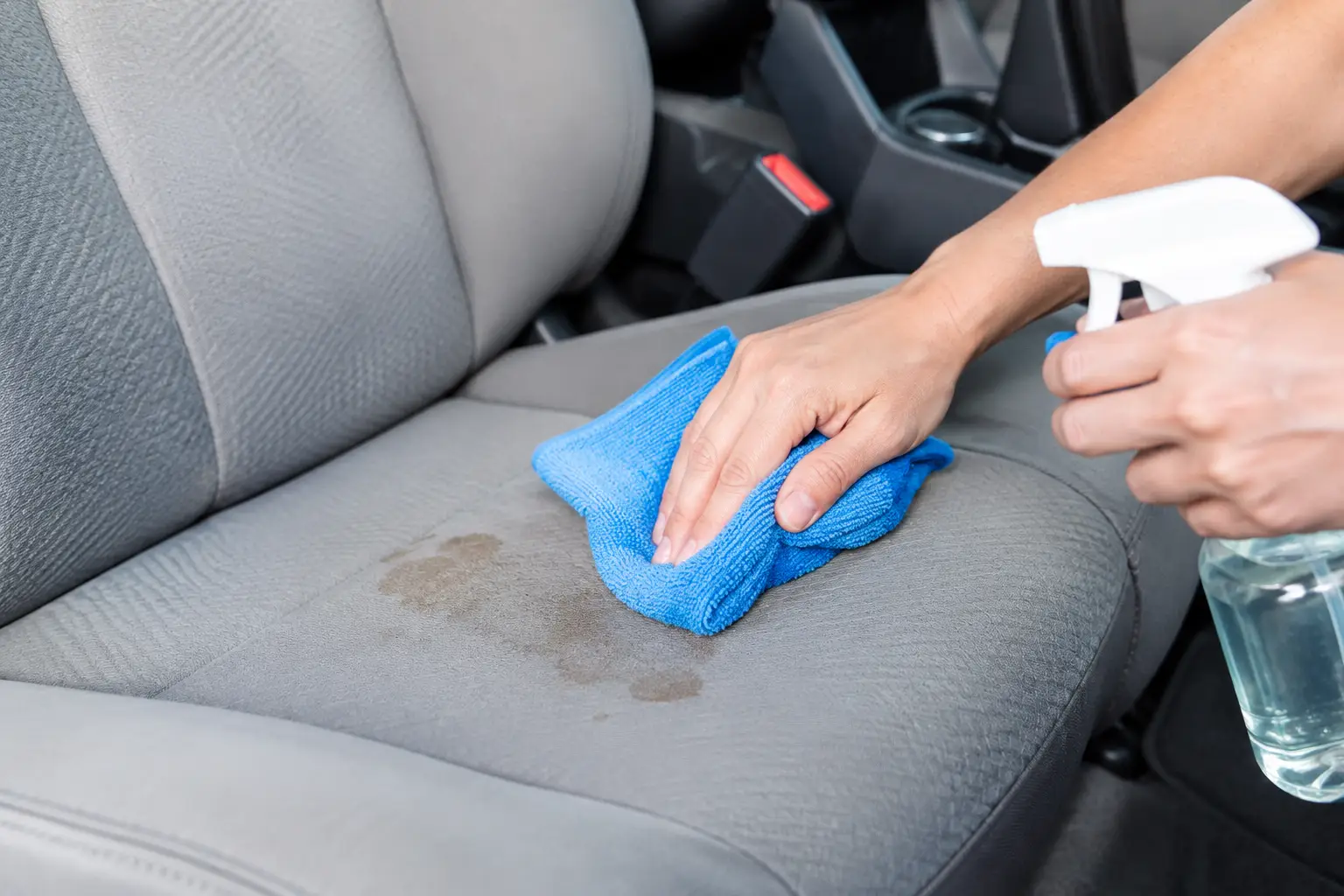
Fresh spills are easier to address than set-in stains. Use a clean, absorbent microfiber towel or plain white cloth to blot the area. Press firmly, then lift. Do not rub in circles, since friction can push the spill deeper and spread it outward.
For thick spills such as yogurt, chocolate, mud, or sauce, gently remove the excess with a plastic card or the edge of a spoon before blotting. Starting with less material on the seat makes the cleaning process more controlled.
Use a Light Upholstery Cleaner
Apply a quality interior upholstery cleaner to a microfiber towel or soft upholstery brush rather than spraying heavily onto the seat. Work the cleaner into the stained area with light, controlled motions. For textured fabric, a soft brush can help bring dirt to the surface.
Blot the area with a second clean towel to remove loosened soil and cleaner residue. Repeat only as needed. If you use too much product, the seat may feel crunchy after drying or develop a water ring around the cleaned section.
A diluted solution of mild dish soap and water can help with small food or drink stains when a dedicated upholstery cleaner is not available. Use very little soap, keep the towel damp rather than soaked, and follow with a clean water-dampened towel to remove residue.
Dry the Seat Completely
Drying matters as much as cleaning. Leave doors or windows open in a secure location, run the vehicle’s fan, or use air movers if available. Avoid sitting on the seat until it is dry.
Denver’s dry climate can speed up drying, but cooler weather and deeply saturated cushions still need time. Moisture trapped in seat foam can create musty odors and make a stain seem to return as contaminants wick back to the surface.
Treat Common Stains Based on What Caused Them
The right approach depends on the stain. Using a strong all-purpose cleaner for every problem can damage upholstery or leave residue without fully removing the source.
Coffee, soda, and juice: Blot immediately, then use an upholstery cleaner or a lightly dampened towel with mild soap. Sugary drinks often require a second pass to remove sticky residue. If milk or cream was involved, odor treatment may also be necessary.
Grease, sunscreen, and body oils: These stains need a cleaner designed to break down oils. Apply sparingly, agitate gently with a soft brush, and blot repeatedly. Harsh solvents are a poor choice because they can affect dyes, adhesives, and seat padding.
Mud and salt residue: Let heavy mud dry first, then vacuum it thoroughly before using moisture. For winter road-salt marks, use a lightly damp towel and a pH-balanced interior cleaner. Clean beyond the obvious spot so the surrounding fabric dries evenly.
Pet accidents: Address these quickly with an enzyme-based odor and stain treatment suitable for automotive upholstery. Surface cleaning may remove the visible mark, but urine can penetrate through fabric into the cushion. When odor remains after drying, deeper extraction is usually needed.
Ink, makeup, and dye transfer: These are high-risk stains. Test any product carefully and avoid aggressive rubbing. Ink and denim dye can spread or become permanent when treated with the wrong chemical. A professional interior detailer is often the safer choice for these stains, particularly on light leather or perforated seats.
Cleaning Leather and Synthetic Leather Safely
Leather requires a different approach. It does not respond well to saturation, harsh degreasers, household disinfectants, or abrasive brushes. Those products can strip protective coatings, dry the surface, and leave a dull or uneven finish.
Begin by vacuuming seams and crevices with a soft attachment. Then apply a pH-balanced leather cleaner to a microfiber towel or soft leather brush, not directly into the seat. Clean one small section at a time, wiping away residue promptly.
For most food, drink, and everyday grime, gentle cleaning is enough. Follow with a quality leather conditioner if the seat manufacturer recommends it. Conditioning helps maintain suppleness, but it is not a cure for cracking, color loss, or deep dye transfer.
Synthetic leather and vinyl are usually more resistant to spills, yet they still benefit from a dedicated interior cleaner. Avoid glossy dressings. A slippery, shiny seat may look freshly treated for a day, but it can attract dust and create an unnatural finish.
Mistakes That Can Make Car Seat Stains Worse
The most common mistake is soaking the seat. A saturated cushion takes much longer to dry and can retain cleaner, odor, and moisture below the upholstery. Steam can also be useful in trained hands, but excessive heat or moisture may affect adhesives, electronics, and delicate materials.
Another mistake is using the same towel throughout the job. Once a towel is loaded with dirt or cleaner, it can redeposit contamination onto the seat. Switch to fresh microfiber towels as you work.
Skip bleach, glass cleaner, laundry detergent, and strong household stain removers unless the product specifically states it is safe for automotive interiors. Vehicles use different materials, dyes, and coatings than household furniture. What works on a kitchen counter or white shirt can permanently alter a car seat.
Finally, do not judge the result until the upholstery is fully dry. A stain may look gone when damp, then reappear during drying. This is called wicking, and it often means contamination remains in the seat padding rather than on the fabric surface.
When Professional Interior Detailing Is the Better Option
DIY cleaning works well for small, fresh spills. Professional detailing becomes a better value when stains are old, widespread, odor-producing, or embedded in heavily used seats. This is especially true for family SUVs, work trucks, vehicles with pets, and light-colored luxury interiors where uneven cleaning is easy to see.
A detailed interior service can include targeted stain treatment, vacuuming, agitation, hot-water extraction when appropriate, odor removal, and controlled drying. The process is selected based on the upholstery, not simply applied the same way to every vehicle. That distinction protects materials while delivering a cleaner, more consistent finish.
For Denver-area drivers who want that work handled at home or the office, FB Mobile Auto Detailing brings professional interior care directly to the vehicle. This can be particularly helpful when a spill has reached multiple seats, carpet, seat belts, or hard-to-reach seams.
A clean seat is more than a cosmetic improvement. It makes every commute, school run, and road trip more comfortable. Treat spills early, use gentle methods, and get professional help before a stubborn stain becomes part of the interior.


