
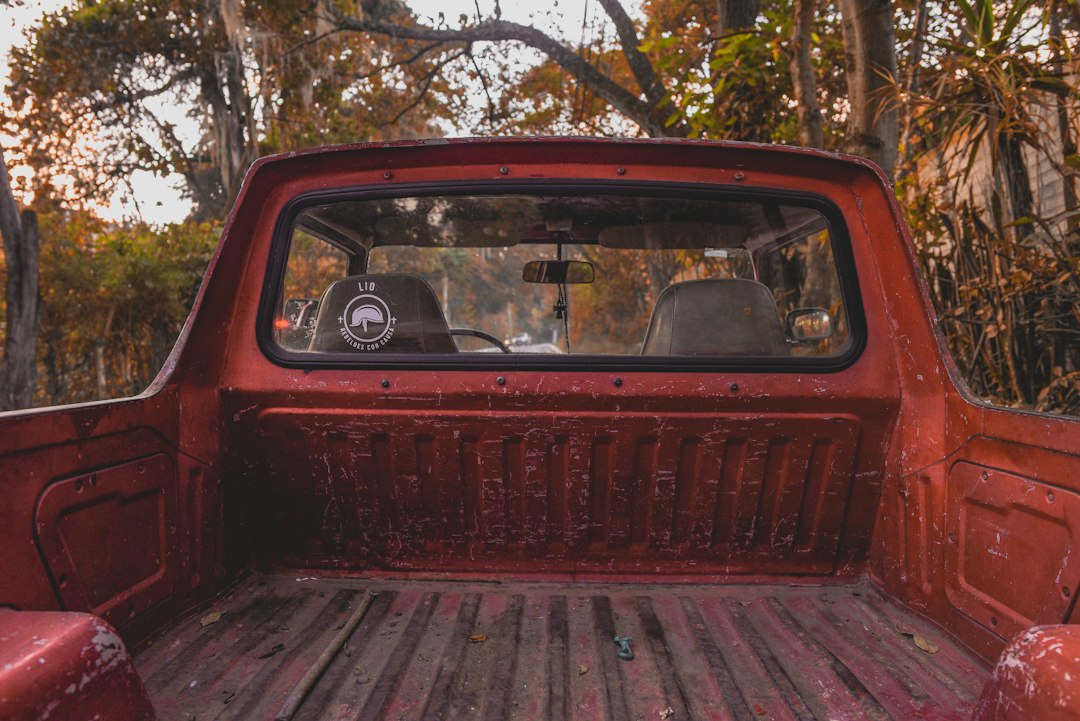
Why So Many Truck Owners Skip Detailing — And What It Costs Them
Trucks are built to take a beating. That reputation is both their greatest strength and the reason so many owners justify skipping professional detailing year after year. The logic goes something like: “It’s a work truck, what’s the point?” That thinking is an expensive mistake. When a long-neglected vehicle finally gets detailed, it needs a far more intensive and expensive restoration than routine maintenance ever would have. You do not avoid the cost by skipping; you just pay it all at once, plus the permanent damage that cannot be undone.
Here in Colorado, the stakes are even higher. High-altitude UV exposure, gravel roads in mountain passes, road salt through long winters, and temperature swings from single digits to 90 degrees all hit the paint, glass, and interior within the first year. If you own a truck and have been putting off that detailing appointment, this article is for you.
Key Takeaways
-
Colorado’s altitude makes detailing more urgent: Colorado’s average elevation sits above 6,800 feet, and UV intensity at that altitude runs 25 to 35 percent higher than at sea level. That accelerates paint fade and interior degradation faster than owners expect, so aim for detailing every three to four months, not once a year.
-
Skipping creates a compounding bill: Contaminants you do not remove, bug acid, bird droppings, tree sap, road salt, water spots, etch into the clear coat over time. A regular detail removes them before they bond. Skip it, and surface stains become permanent etching that requires expensive paint correction, or cannot be fully fixed at all.
-
Your resale value is on the line: Regular car detailing preserves both the exterior and interior condition of your vehicle. Professional detailing services can increase a car’s resale value by up to 15%, translating to thousands of dollars in added worth. Start before you plan to sell, not the day before.
-
Mag chloride is your truck’s silent enemy: Colorado has used magnesium chloride as a road deicer since 1996. Unlike traditional rock salt, which requires humidity above 70% to dissolve and corrode, magnesium chloride activates at humidity as low as 20 to 30%. In Denver’s dry climate, it stays chemically active on your vehicle’s undercarriage even on clear, sunny days after a winter storm.
-
Mobile detailing removes the biggest barrier: 42% of vehicle owners prefer mobile detailing over fixed-location services. Services like FB Mobile Auto Detailing come to your home or office, eliminating the time excuse entirely.
Quick-Start Prioritisation Framework
| Situation | Priority Service | Effort Level | Time to Results |
|---|---|---|---|
| Daily driver, outdoor parking | Full detail + sealant | Medium | Immediate |
| Post-winter (spring clean-up) | Undercarriage rinse + exterior decon wash | Low | Same day |
| Pre-sale / trade-in | Paint correction + interior shampoo | High | 1-2 days |
| Work truck, heavy use | Quarterly maintenance detail | Low (recurring) | Ongoing |
| New truck, first year | Ceramic coating consultation | Medium | Days |
Start here if you’re:
-
A daily driver in Denver: Book a full detail now, then set a quarterly reminder. Most Denver drivers benefit from a full detail two to four times per year. The most important appointment is early spring, after winter road treatment with magnesium chloride, a corrosive deicer used throughout Colorado that bonds to paint, wheel wells, and undercarriage surfaces.
-
A work truck owner: Focus on at least a maintenance wash every six weeks. In the Denver climate, washing every four to six weeks helps protect a daily driver against high-altitude sun, winter road treatment, and dust. Washing more often through winter clears mag chloride before it settles in.
-
Planning to sell: Invest in a full detail before listing. One vehicle owner who wanted to trade in a 2015 SUV was initially offered $10,000 due to visible scratches and a dirty interior. After spending $300 on detailing, the dealer increased the offer to $11,200, a $1,200 gain from a $300 investment.
The Real Reasons Truck Owners Skip Detailing
Let’s be honest about why it happens. Most truck owners do not skip detailing out of laziness; they skip it because detailing has an image problem. It feels like a luxury for car enthusiasts, not a practical priority for someone hauling gear, driving mountain passes, or logging long commutes.
“It’s a Work Truck, It’ll Just Get Dirty Again”
This is the most common excuse I hear, and it is understandable. But it misses how detailing actually works. Regular detailing applies protective layers, wax, sealant, or ceramic coating, that make your truck easier to clean each time. A protected surface sheds mud, dust, and mag chloride far more readily than bare, oxidised paint. Car detailing does far more than make your vehicle shine. It is a form of protection and maintenance that keeps your truck running and looking its best all year long.
“I Don’t Have Time to Drive to a Shop”
Fair enough. This is precisely why mobile detailing in Denver has grown so significantly. 42% of vehicle owners now prefer mobile detailing over fixed-location services, and providers like FB Mobile Auto Detailing bring professional equipment directly to your driveway or work site. You hand over the keys and get on with your day.
“It Costs Too Much”
This objection dissolves when you compare detailing costs to repair costs. A basic detail typically runs $100 to $150, while a full-service detail costs $200 to $300. Compare that to what happens when paint is neglected. Car paint repair costs in 2026 range from $150 for a simple touch-up to $7,500 or more for a full-vehicle respray with premium paint. The national average for a single-panel repair falls between $300 and $1,000. A $200 detail now versus a $1,000 panel repair later, the maths is clear.
Pro Tip: Book your first detail immediately after winter ends. Spring is when mag chloride residue, road grit, and freeze-thaw contaminants have had months to work on your paint and undercarriage. Clearing them early stops the damage clock.
What Colorado’s Environment Does to an Undetailed Truck
UV Radiation at Altitude
Colorado is not a gentle climate for vehicles. Colorado Springs sits at 6,035 feet elevation, where UV intensity increases by approximately 4 to 5 percent for every 1,000 feet of elevation gain, meaning vehicles at this altitude face roughly 25% more radiation than at sea level. On an unprotected truck, Colorado Springs sits at 6,035 paint degradation through multiple mechanisms. Visible damage includes faded or dull paint, chalky oxidation, peeling clear coat, and surface cracking.
In my experience working with vehicle owners in the Denver area, paint fade is one of the most shocking realisations owners have when they finally book their first detail after two or three years of neglect. What looked like a minor dullness turns out to be oxidation that requires significant correction work, sometimes costing more than several years of routine detailing combined.
Magnesium Chloride: The Invisible Threat
In Colorado, the predominant road treatment solution used is magnesium chloride. Most truck owners assume washing the body panels is enough. It is not. Over time, liquid magnesium chloride can cause extensive corrosion and damage to your truck’s exterior, undercarriage, and mechanical components. When it gets onto your vehicle, it creates a layer of moisture that accelerates rust and corrosion, especially in areas where water tends to pool, such as the undercarriage, wheel wells, and engine bay.
According to automotive repair experts, automotive repair experts and ball joints can all suffer due to corrosion caused by magnesium chloride. Damage to a corrosion-weakened ball joint or axle while driving can mean loss of vehicle control. This moves well beyond an appearance issue. A professional detailer who also addresses the undercarriage is providing a safety service, not just a cosmetic one.
Freeze-Thaw Cycles and Paint Damage
In colder months, moisture enters small paint chips and freezes overnight, expanding and breaking down surrounding layers. Repeated freeze-thaw cycles lead to cracking, bubbling, peeling, and eventually rust. A truck with a chip in its paint that goes untreated through a Colorado winter will have significantly more damage by spring than it did in autumn. A detailing session that includes paint decontamination and a fresh sealant coat before winter can prevent that cycle from starting.

The True Cost of a Neglected Truck Interior
Most truck owners think about exterior paint when they consider detailing. The interior tells an equally expensive story.
Carpet and Upholstery Replacement
Trucks spend time on job sites, mountain trails, and construction areas. Mud, debris, and moisture work into the carpet and upholstery week after week. Once staining and mildew take hold, cleaning is no longer enough. According to car upholstery pricing data from CarUpholsteryCost.com, a full interior replacement for a pickup truck with cloth or vinyl runs $2,800 to $4,800, and mixed cloth plus leather climbs to $3,800 to $6,400. A routine interior detail that costs $100 to $200 every few months is the alternative to an eventual five-figure interior overhaul.
Leather and Trim Deterioration
Exterior trim and interior plastics that never get cleaned and protected fade, chalk, and crack under UV exposure. Replacing trim pieces costs real money; protecting them during a detail costs almost nothing. Skipping it ages the vehicle visibly and prematurely.
I have seen Colorado truck interiors where the dashboard has split and the leather seats have cracked beyond repair simply because UV-protective conditioners were never applied. At altitude, the sun hits hard enough to do that damage faster than most owners realise.
Pro Tip: Colorado’s 300-plus annual days of sunshine accelerate interior UV damage. Ask your detailer to apply a UV-protective dressing to all plastics, leather, and vinyl surfaces at every visit. It takes minutes and adds years to the life of your cabin materials.
This footage of a heavily neglected work truck being stripped back to a clean interior gives a clear sense of just how much grime accumulates when routine care is skipped.
What Skipping Detailing Costs at Resale
This is where the numbers become impossible to ignore. Visible paint damage, oxidation chips, scratches, fading, typically reduces a vehicle’s value by 10 to 15% at resale. On a $50,000 vehicle, that is a $5,000 to $7,500 loss.
Research consistently shows that properly detailed vehicles command premium prices. One industry study found that 75% of buyers would pay more for a professionally detailed vehicle, while another revealed that detailed cars retain up to 45% more of their original value compared to those without professional treatment.
The Squeaky Pete’s Detailing value tracking report puts the long-term picture plainly: vehicles with documented professional maintenance history typically retain 15 to 25% more of their value compared to neglected vehicles of the same make, model, and mileage. For a $40,000 vehicle, that difference can amount to $6,000 to $10,000 in retained value over three to five years.
Spend $200 to $300 per detail, three times a year, that is roughly $600 to $900 annually. Retain an extra $6,000 to $10,000 at trade-in. That is one of the best returns available on any vehicle expenditure.
Pro Tip: Keep a simple record of every detail appointment, including the date and service performed. Buyers and dealers respond well to documented care history; it signals that the mechanical side of the vehicle was likely maintained with the same attention.

How to Build a Detailing Routine That Actually Sticks
The biggest barrier to regular detailing is friction, making appointments, dropping off the vehicle, waiting. Mobile detailing in Denver removes almost all of that friction. 42% of vehicle owners prefer mobile car detailing precisely because it fits around their schedule.
A Practical Seasonal Schedule for Colorado Truck Owners
-
Late autumn (October/November): Full detail plus sealant or wax layer before mag chloride season begins. This creates a barrier between the winter chemistry and your paint.
-
Early spring (March/April): Post-winter decontamination wash to clear mag chloride, road grit, and salt residue from paint, wheel wells, and undercarriage.
-
Mid-summer (June/July): Interior focus, UV-protective treatment on all surfaces, carpet vacuuming and shampoo if needed.
-
As needed: Spot treatments after off-road trips, job site exposure, or visible contamination.
Colorado’s high altitude means UV exposure is roughly 25% more intense than at sea level, which accelerates paint oxidation, fades interiors, and degrades rubber seals and trim pieces. Most Denver-area drivers should lean towards quarterly detailing rather than the once-yearly approach many people default to.
If you want to take the guesswork out of the schedule entirely, services like FB Mobile Auto Detailing can set up recurring appointments so your truck is protected without you having to remember to book.
Frequently Asked Questions
How often should a truck be professionally detailed in Colorado?
Most vehicles need full detailing every four to six months, or two to three times a year. Daily drivers or vehicles parked outdoors should be detailed every three to four months. For trucks regularly exposed to off-road conditions, job sites, or winter roads, quarterly is the right cadence. The first spring appointment after winter is the most critical one of the year.
Is mobile detailing in Denver as thorough as a shop-based service?
In my experience, yes, provided you book with a well-equipped provider. Professional mobile detailing services carry their own water, power, and product supplies. A full interior-and-exterior detail can run three to five hours, and a ceramic coating job may take a full day depending on prep and paint correction. Quality comes down to the technician’s training and equipment, not the location.
Does detailing actually protect against Colorado’s mag chloride?
Directly, a detail creates a protective barrier, wax, sealant, or ceramic coating, that slows the rate at which mag chloride bonds to paint and penetrates clear coat. Magnesium chloride accelerates rust formation on metal components including brake systems, fuel lines, and undercarriages. Its hygroscopic nature allows it to pull more moisture toward the surface, keeping the corrosive process active for longer. A proper decontamination wash after winter removes built-up residue before it has time to cause deeper damage.
How much does a full truck detail typically cost?
A basic detail typically runs $100 $100 to $150 and covers an exterior wash, interior vacuum, tyre dressing, and a quick wax. A full-service detail runs $200 to $300 and includes complete interior and exterior cleaning, clay bar treatment, polishing, and protective wax. Trucks are larger vehicles, so expect to sit toward the higher end of these ranges. Paint correction, if needed due to neglect, adds $200 to $1,000 or more depending on severity.
What happens if I only wash my truck and skip the detail?
A wash removes surface dirt. A detail goes deeper, decontaminating the paint, conditioning interior materials, addressing oxidation, and applying protective coatings. Professional car detailing maximises your vehicle’s resale value by halting clear coat oxidation, eliminating deep-seated cabin odours, and preventing permanent upholstery degradation. A vehicle subjected to routine cosmetic decontamination commands a higher resale price than an identical, unmaintained counterpart. Regular detailing builds a visible history of meticulous ownership that signals mechanical health and reduces dealership reconditioning deductions during an appraisal.
The Bottom Line
Truck owners who skip detailing are not saving money. They are deferring a bill that will arrive larger than it left. There is a real risk that if you put off a small maintenance item today, it could snowball into a bigger and more costly problem down the road. Between Colorado’s altitude-intensified UV, the mag chloride that saturates Front Range roads from October through April, and the freeze-thaw cycles that work on every unprotected chip and scratch, neglect compounds faster here than almost anywhere else in the country.
A quarterly mobile detailing schedule, something that FB Mobile Auto Detailing can set up for you without any trip to a shop, is not a luxury spend. It is the lowest-cost version of truck ownership available to you. Book one appointment, see what a properly protected vehicle feels like, and the maths will make the decision for you.
Sources
-
The Hidden Dangers of Skipping Auto Detailing, Gemstar Detailing. Covers paint damage, resale impact, and headlight deterioration from neglect. the consequences of neglecting regular detailing
-
7 Hidden Costs of Skipping Quarterly Car Detailing, Jax Kar Wash. Covers corrosion, resale loss, and paint etching from deferred maintenance. https://jaxkarwash.com/hidden-costs-skipping-quarterly-detail/
-
Automotive Detailing Industry Statistics 2026, Gitnux. Consumer preference data including mobile detailing adoption rates. https://gitnux.org/automotive-detailing-industry-statistics/
-
New Car Protection in Colorado: PPF, Ceramic Coating & Tint, Premium Auto Solution. Colorado altitude and UV intensity data. https://www.premiumautosolution.com/new-car-protection-colorado/
-
Why PPF? Colorado Springs Automotive Protection Specialist, WFXG. UV intensity data by elevation and paint degradation mechanisms. Colorado Springs sits at 6,035
-
Car Paint Repair Cost 2026, Ecostify. Paint repair cost ranges by damage type and panel. https://www.ecostify.com/blog/car-paint-repair-cost
-
The Real Cost of Neglecting Paint Protection, EuroLuxe Detailing. Respray costs and depreciation impact of paint neglect. https://euroluxedetailing.com/blog/real-cost-of-neglecting-paint-protection/
-
How Regular Car Detailing Increases Your Resale Value, Parle Mag. Resale value data and detailing ROI. https://parlemag.com/2026/05/how-regular-car-detailing-increases-your-resale-value/
-
Auto Detailing for Dealerships: How Professional Detailing Increases Resale Value, C&C Powerwashing. Buyer behaviour and value retention statistics. https://ccpowerwashing.com/auto-detailing-for-dealerships-how-professional-detailing-increases-resale-value/
-
Vehicle Value Preservation Through Professional Detailing, Squeaky Pete’s Detailing. Long-term value retention data for maintained vs. neglected vehicles. https://www.squeakypetes.com/vehicle-value-preservation-through-professional-detailing
-
How Much Does a Car Detail Cost? 2026 Pricing Guide, Auto Cleaned. National average pricing by service tier. A basic detail typically runs $100
-
Auto Upholstery Cost Estimate Chart: 2026, CarUpholsteryCost.com. Interior replacement cost ranges by vehicle size and material. https://www.carupholsterycost.com/auto-upholstery-cost-chart/
-
How Boost Your Vehicle’s Resale Value with Effective Detailing, Memphis Auto Detailing. Real-world detailing ROI case studies. https://www.memphisautodetailing.com/post/boost-your-vehicle-s-resale-value-with-effective-detailing
-
Is Mag Chloride Destroying Your Car?, Autowash Colorado. Magnesium chloride corrosion mechanisms and vehicle impact. https://www.autowashco.com/post/is-mag-chloride-destroying-your-car
-
Magnesium Chloride Car Damage in Colorado, Automotive Repair Loveland. Front Range vehicle corrosion from mag chloride. https://automotiverepairloveland.com/blog/magnesium-chloride-car-damage/
-
Denver Drivers: Avoid Problems Caused by Magnesium Chloride Deicer, Prestige Imports. Structural and mechanical risks of mag chloride exposure. automotive repair experts
-
How Often Should I Get My Car Detailed?, Black Diamonds Detailing, Denver. Denver-specific detailing frequency guidance. https://www.blackdiamondsdetailing.com/post/how-often-should-i-get-my-car-detailed
-
How Often Should You Have Your Car Professionally Detailed?, FB Detailing and Coating. Colorado altitude, UV, and detailing frequency guidance. https://www.fbdetailingandcoating.com/how-often-should-you-detail-your-car-2/
-
Car Detailing in Denver FAQs, Panda Hub Denver. Denver detailing frequency recommendations and mag chloride context. https://www.pandahub.com/car-detailing/denver-co
-
Bad Economy Means Poor Auto Maintenance, NBC News / Consumer Reports. Survey data on deferred vehicle maintenance and compounding costs. https://www.nbcnews.com/business/markets/bad-economy-means-poor-auto-maintenance-flna1c7100948


