
How to Remove Swirl Marks Without Harming Paint
Swirl marks can make an otherwise clean vehicle look dull, hazy, or older than it is. If you are wondering how to remove swirl marks, the answer is not simply applying more wax. These fine circular scratches sit in the clear coat and need to be corrected carefully, not covered up. Done properly, paint correction can restore sharp reflections, deeper color, and the gloss your vehicle had when it was new.
What Swirl Marks Actually Are
Swirl marks are very fine scratches in a vehicle’s clear coat, the transparent protective layer over the paint color. They become most noticeable in direct sun, under gas-station lights, or when a dark-colored vehicle is freshly washed. Despite the name, they are not always circular. The pattern depends on how the scratches were created.
Most swirl marks come from friction and contamination. A dirty wash mitt, automatic car wash brushes, rough towels, dry wiping, and improper polishing can drag grit across the surface. Colorado road dust, winter grime, sand, and salt residue give that grit plenty of opportunities to damage paint when washing habits are rushed.
The key distinction is depth. Light swirls affect the upper portion of the clear coat and can often be removed through polishing. Scratches that catch a fingernail may extend deeper and can require a more conservative approach. In some cases, they cannot be fully removed without risking the integrity of the clear coat.
Start With a Proper Wash and Decontamination
Paint correction should never begin on a dirty vehicle. Polishing over embedded debris can create more defects and reduce the quality of the finish. The first step is a thorough hand wash using clean water, pH-balanced car shampoo, and quality microfiber wash media.
Avoid dish soap, stiff brushes, and the single-bucket approach. Dish soap can strip existing protection and dry out exterior trim. A single bucket lets dirt from the vehicle return to the wash mitt, where it can scratch the paint again. Professional detailers use controlled washing methods that keep wash media cleaner throughout the service.
After washing, the paint should be decontaminated. Chemical decontamination helps dissolve iron particles and road fallout that bond to the finish. A clay treatment or synthetic clay alternative can then remove remaining bonded contaminants, leaving the surface smooth. This step matters because a polishing pad cannot work evenly over rough, contaminated paint.
Drying deserves just as much care as washing. Use clean, high-quality microfiber drying towels and a blotting or gentle pulling motion. Rubbing a dusty or poorly rinsed vehicle dry is one of the fastest ways to put fresh swirls back into the clear coat.
Inspect the Paint Before Polishing
A clean vehicle can reveal the true condition of the paint. Look at the finish from several angles under focused lighting. Sunlight is useful, but dedicated inspection lighting often exposes defects that are hidden in normal shade.
Not every panel needs the same correction method. A daily-driven SUV may have moderate swirls on horizontal surfaces, while the doors and lower panels may show more isolated scratches from bags, shoes, pets, or road debris. A luxury or classic vehicle may have softer paint that corrects quickly but is also easier to over-polish. Paint condition, paint thickness, vehicle age, prior bodywork, and the owner’s expectations all influence the right process.
This inspection is why professional paint correction is not a one-size-fits-all service. The goal is to improve the finish substantially while preserving as much clear coat as possible.
How to Remove Swirl Marks With Paint Correction
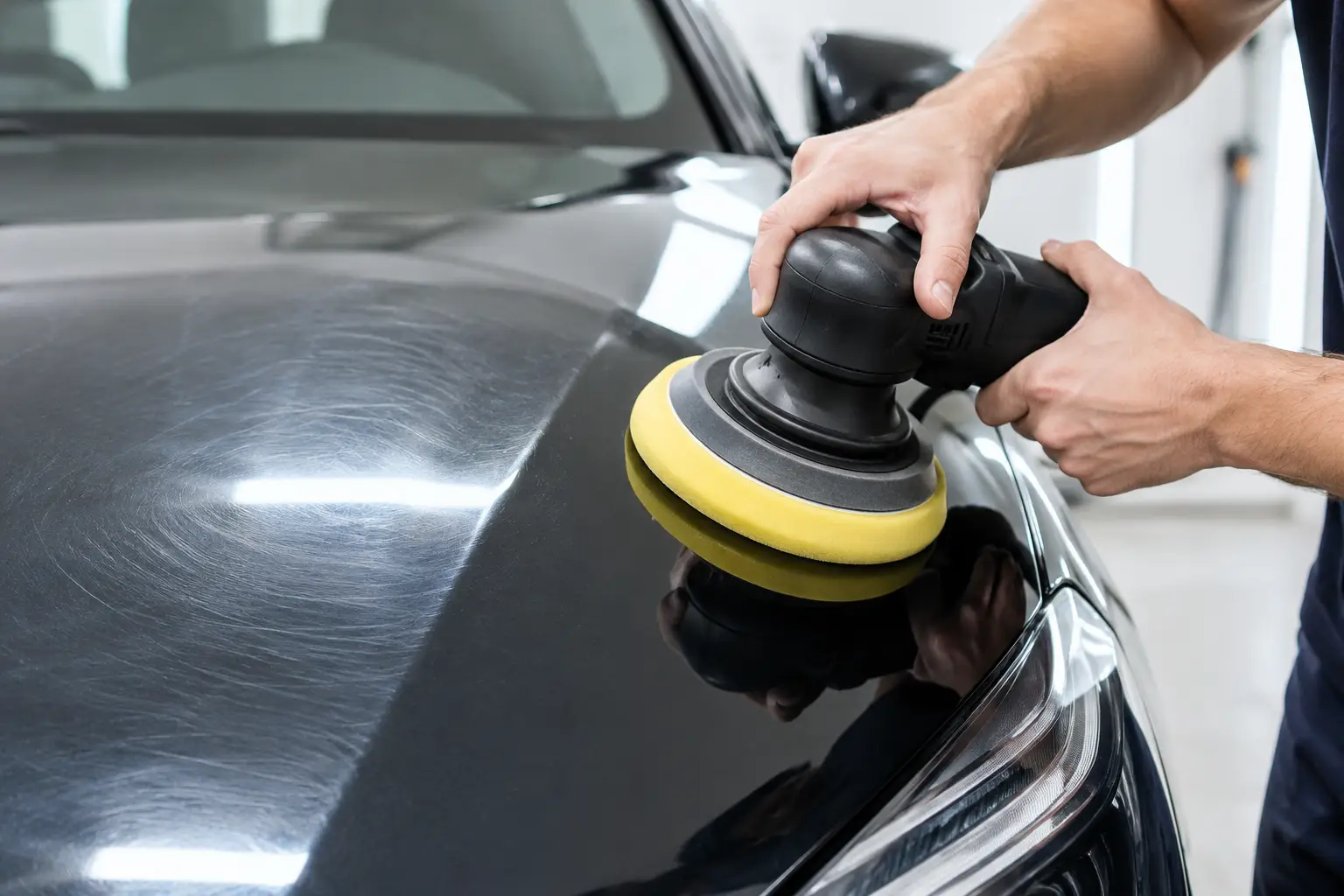
Swirl marks are removed by leveling a microscopic amount of clear coat around the scratches until the surface reflects light evenly again. This is typically done with a machine polisher, an appropriate pad, and a polish or compound selected for the paint condition.
Choose the Least Aggressive Method First
A finishing polish with a soft foam pad may be enough for light wash marring and mild swirls. For heavier defects, a compound and cutting pad may be needed first, followed by a finer polishing step to refine the finish. This is commonly called single-stage or multi-stage paint correction.
Starting gently is essential. A more aggressive combination can remove defects faster, but it also removes more clear coat and may leave haze if it is not followed by proper refining. Experienced technicians test a small area first to find the combination that delivers the best correction with the least necessary abrasion.
Work Small Sections and Keep the Pad Clean
Whether polishing by hand or machine, work in controlled sections instead of trying to cover an entire hood or door at once. Product should be spread evenly, worked according to its instructions, and wiped away with a clean microfiber towel for inspection.
Pads accumulate spent polish and removed paint residue as they work. A clogged pad cuts inconsistently and can create haze or additional marring. Professionals regularly clean or change pads during correction for consistent results from one panel to the next.
Do Not Chase Every Defect
A flawless finish is not always the safest or most realistic goal, especially on older paint. Deep scratches, rock chips, etching, and previous repair work may remain visible after correction. Removing every deep defect could require taking away too much clear coat.
A responsible correction service balances appearance and preservation. On many daily drivers, removing 70 to 90 percent of visible defects produces a dramatic improvement in gloss while maintaining a healthy margin of paint protection. For high-value vehicles, the process may be even more conservative.
Can You Remove Swirl Marks by Hand?
Light swirls can sometimes be improved by hand with a quality finishing polish and foam applicator, especially on a small area such as behind a door handle. Hand polishing is slower and generally cannot deliver the consistency of a dual-action machine polisher, but it can be useful for minor touch-ups.
For widespread swirls across the hood, roof, trunk, and doors, machine correction is usually the better option. The risk for an inexperienced owner is not only burning through paint, although that is possible with improper tools and technique. More commonly, DIY polishing leaves uneven results, hazing, missed defects, or fresh towel-induced marring after the work is complete.
If your vehicle has matte paint, satin paint, vinyl wrap, paint protection film, or a freshly repainted panel, pause before using any polish. These surfaces require different care, and conventional correction may damage the intended finish.
Wax and Ceramic Coatings Do Not Remove Swirls
Wax, sealants, and ceramic coatings can make swirls less noticeable by increasing gloss and filling very minor imperfections temporarily. They do not permanently remove scratches from the clear coat. If the paint has visible swirling in sunlight, correction should come before protection.
Once the paint is corrected, protection helps preserve the result. A quality sealant or wax offers a practical layer of gloss and water repellency but needs more frequent reapplication. A professionally installed ceramic coating provides longer-term hydrophobic behavior, UV resistance, and easier maintenance. It is particularly useful for Denver-area vehicles that face strong sun, road grime, winter salt, and frequent temperature changes.
A ceramic coating is not scratch-proof. It will not prevent every wash mark or rock chip. Its value is that it makes contaminants easier to remove and supports safer maintenance when paired with proper washing habits.
Keep Swirl Marks From Returning
The best paint correction is one you do not have to repeat often. After the finish is restored, wash only when the vehicle has enough lubrication to safely lift dirt away. Never wipe dry dust from paint with a towel, even if the vehicle looks mostly clean.
Use separate towels for paint, wheels, and lower rocker panels. Wash microfiber towels without fabric softener, and replace them when they become rough or heavily stained. If you use an automatic wash, touchless is generally safer than a tunnel wash with spinning brushes, although a careful hand wash remains the best choice for minimizing new paint defects.
For vehicle owners who want professional correction without losing a day at a shop, FB Mobile Auto Detailing & Coating can perform paint-focused services at a home or workplace. The process begins with the condition of your specific vehicle, not a preset promise that treats every paint system the same.
A clear, glossy finish is built through careful correction and protected through better maintenance. Treat the paint gently after it is restored, and every wash becomes an opportunity to preserve the results rather than start the swirl-mark cycle again.


