
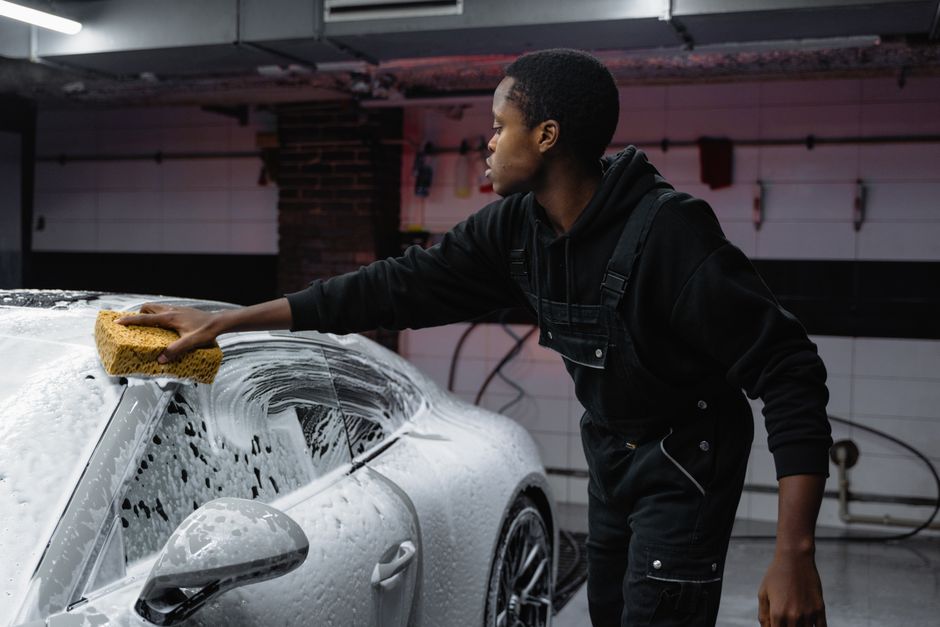
Paint Decontamination – The Step Most Car Owners Skip and Later Regret
Every week, I speak with vehicle owners who have spent hundreds of dollars on ceramic coatings, waxes, and professional polishes, only to be frustrated when the results disappoint. The finish looks cloudy. The protection fails early. The gloss falls short of what was promised. In nearly every case, the culprit is the same: paint decontamination was skipped.
Paint decontamination is the process of removing bonded contaminants from a vehicle’s clear coat that a standard wash cannot dislodge, and it is the single most important preparatory step before applying any form of paint protection. Most car owners have never heard of it. And that gap in awareness is costing them far more than they realise.
Here in Colorado, the problem is compounded significantly. Vehicles in Colorado face a constant battle against extreme weather conditions, including high altitude, powerful UV rays, low humidity, hailstorms, snow, and freeze-thaw cycles that put immense stress on a vehicle’s exterior. Add in the iron fallout accumulating during every daily commute, and your paintwork is under attack year-round, whether you can see it or not.
Key Takeaways
-
Washing alone leaves your paint contaminated: A clean-looking, freshly washed car is not actually clean at the microscopic level. Every panel carries embedded brake dust, industrial fallout, road tar, and rail dust that a normal soap wash cannot remove. Therefore, schedule a decontamination service at least once or twice a year, not just a regular wash.
-
Skipping decon ruins ceramic coatings: A ceramic coating bonds to whatever is on the surface at the moment of application. If contamination is present, the coating bonds to contamination rather than to the clear coat, which drops coating durability and reduces gloss. Therefore, always insist on decontamination before any coating service.
-
Colorado’s UV is 25% more intense at altitude: Colorado’s high altitude means UV exposure is roughly 25% more intense than at sea level, which accelerates paint oxidation, fades interiors, and degrades rubber seals and trim pieces. Therefore, Colorado drivers need more frequent protective treatments than the national average.
-
Iron contamination is invisible but damaging: The primary source of automotive iron contamination is brake dust. Every time a vehicle brakes, friction between brake pads and rotors generates fine metallic particles that become airborne and have enough kinetic energy to embed themselves into paint surfaces. Therefore, if you drive on busy roads, assume your paint is already contaminated.
-
Professional decon costs far less than a respray: Iron particles left untreated will eventually work all the way through the clear coat and begin damaging the base paint layer underneath, at which point the only option is to respray the entire vehicle and apply a new clear coat. Therefore, a periodic decontamination service is always the more economical choice.
Quick-Start Prioritisation Framework
| Situation | Recommended Action | Effort Level | Time to Results |
|---|---|---|---|
| New car, no coating yet | Full decon before first protection | Low | Same day |
| Car washed regularly but dull paint | Chemical + clay decon service | Medium | Same day |
| Pre-ceramic coating prep | Full 3-stage decon + correction | Medium-High | 1-2 days |
| Post-winter Colorado vehicle | Iron remover + tar remover + clay | Medium | Same day |
| Heavily neglected paint | Full decon + paint correction | High | 1-3 days |
Start here if you’re:
-
A daily driver commuter: Book a chemical and clay decontamination service now. High-traffic roads are among the highest iron fallout environments, and vehicles that commute these routes daily accumulate iron in their paint at a measurably higher rate than vehicles in lower-traffic environments.
-
Planning a ceramic coating: Professional ceramic coating preparation typically includes washing, chemical decontamination, mechanical decontamination, paint inspection, paint correction when necessary, and final panel preparation. Most experienced detailers agree that preparation has a greater impact on coating performance than the coating application itself.
-
Coming out of a Colorado winter: Address road salt and magnesium chloride residue with a full decontamination wash before spring. Magnesium chloride works its way into every crevice, including the undercarriage, wheel wells, and even electrical wiring, causing rust and wiring corrosion that can lead to expensive repairs.
What Paint Contamination Actually Is (and Where It Comes From)
The Invisible Threat on Every Panel
Most people assume a freshly washed car is a clean car. Run your hand across a freshly washed car. If it feels rough or gritty instead of glass-smooth, you are feeling contaminants bonded to the clear coat. A major contributor is iron fallout, tiny metallic particles that embed themselves in paint and cause damage that regular washing will never touch.
Tiny iron particles from brake dust, industrial fallout, and road debris embed themselves into the clear coat, causing gradual oxidation and damage. These contaminants do not just sit on the surface; they bond with the paint, leading to discoloration, rough textures, and even permanent staining if left untreated.
Common Sources of Paint Contamination
Understanding where contamination originates helps you appreciate why it is so difficult to avoid:
-
Brake dust from your own vehicle and traffic around you
-
Industrial fallout from factories, construction sites, and rail lines
-
Road tar and asphalt residue from fresh or deteriorating road surfaces
-
Tree sap, bird droppings, and organic matter that bond chemically to clear coat
-
Magnesium chloride and road salt used heavily during Colorado winters
Iron sitting in clear coat expands slightly as it oxidises, the same rusting process that causes iron to expand and crack concrete. This micro-expansion damages the surrounding clear coat at the embedding site. Additionally, the iron particles act as abrasive material during subsequent washing, as any wash mitt contact over a surface containing embedded iron particles drags those particles across the clear coat, creating scratches.
Pro Tip: Try the plastic bag test at home. Slip your hand inside a clean thin plastic bag and run it gently over a freshly washed panel. If the bag snags or feels gritty rather than gliding smoothly, your paint is contaminated and needs professional attention.
The Three-Stage Decontamination Process Explained
Stage One, Chemical Decontamination (Iron and Tar Removal)
Always start with chemical decontamination. After a thorough wash and rinse, apply a high-quality iron remover and, if tar is present, a tar remover.
The active ingredient in iron remover, usually ammonium thioglycolate or a similar iron-reactive compound, bonds with ferrous metal particles embedded in the clear coat and converts them into a water-soluble salt that rinses off. You will see the product turn a distinctive purple-red colour as it reacts, which is satisfying confirmation that the chemistry is working.
Iron remover works only on iron. It does not touch sap, tar, paint overspray, or non-ferrous contamination. That is why tar removers are used alongside iron products as a separate step. Proper tar and glue removal is critical because these contaminants can be very difficult to remove with a clay bar alone, and attempting to do so can damage the paint.
Stage Two, Mechanical Decontamination (Clay Bar or Clay Mitt)
Once chemical decontamination is complete, mechanical decontamination removes whatever remains.
Mechanical decontamination is a synonym for the term “claying”, an abrasive way of removing contamination that withstood the chemicals applied previously. A clay bar, in a soft, medium, or heavy grade, is carefully moved over the paint in conjunction with appropriate lubrication to help the clay medium glide.
After the chemical decontamination steps, the clay bar becomes a much more effective and safer tool. The iron removal and tar removal products have already removed the majority of embedded contaminants, leaving the clay bar to focus on any remaining surface-level imperfections.
Pro Tip: Always do chemical decontamination before reaching for the clay bar. Iron particles are sharp. Claying over embedded iron can drag those particles across the paint, causing scratches. Getting the sequence right is non-negotiable.
Stage Three, Inspection and Panel Prep
Once decontamination is complete, the surface is inspected under controlled lighting to assess whether paint correction is needed before any protective product is applied. Proper preparation is essential because ceramic coatings bond directly to the paint surface. Any contamination, polishing oils, water spots, or paint defects left behind can affect coating durability, gloss, hydrophobic performance, and long-term protection.

The following walkthrough covers the full decontamination sequence in practice, showing how each stage connects to paint correction and protection.
Why Decontamination Matters Even More in Colorado
I’ve found that Colorado vehicle owners are among those who most urgently need regular decontamination services, yet are often the least aware of it. Living and working in this state, I see the combined effects of altitude, UV intensity, road chemistry, and temperature swings on paint every single day.
The Altitude and UV Factor
Colorado’s high altitude means UV exposure is roughly 25% more intense than at sea level, which accelerates paint oxidation, fades interiors, and degrades rubber seals and trim pieces. UV-damaged paint becomes porous and more susceptible to bonding with contaminants. A vehicle with UV-degraded clear coat accumulates iron fallout faster and holds onto it more aggressively than a well-protected surface. If you’re not seeing a UV-protective ceramic coating or sealant on your vehicle, you are falling behind.
Winter Road Chemistry
Winter in Colorado means snow ice, and the constant use of road salt to keep the streets safe. Road salt is highly corrosive and can eat away at your car’s paint, leading to rust and deterioration. Magnesium chloride, used heavily on Colorado roads, is even more aggressive. The combination of snow and salt can create conditions where dirt and contaminants stick to a car’s surface, further damaging the paint.
The practical implication is clear: Colorado vehicles need a thorough decontamination service at least twice a year, once after winter to remove salt and chemical residue, and once before the harsh UV summer sets in.
Pro Tip: Decontamination is ideally performed once before winter and once after winter, in order to eradicate the harshest and most harmful contamination prior to getting your car looking its best for spring and summer. In Colorado, treat this as a minimum standard, not a luxury.
The Ceramic Coating Mistake You Cannot Undo
This is where skipping decontamination becomes genuinely costly. Many vehicle owners invest significant money in ceramic coatings, entry-level professional coatings start at $750 to $1,000, while multi-layer systems range from $1,500 to $2,500 or more. Skipping the decontamination stage before that investment is applied is a mistake you live with for years.
The same principle that applies to adhesive strips applies to ceramic coatings and paint protection film, if they are not applied to perfectly clean surfaces, they will not adhere properly. Contamination destabilises the bond that keeps coatings and PPF on the paint.
If preparing a surface for ceramic coating or paint protection film, contaminated paint will compromise adhesion and trap problems under the product. The result is hazing, poor bonding, and premature failure.
According to Brilliatech’s ceramic coating preparation guide, most experienced detailers agree that surface preparation has a greater impact on coating performance than the coating application itself. Therefore, if you are budgeting for a ceramic coating, treat decontamination as a non-negotiable part of that budget, not an optional add-on.
At FB Mobile Auto Detailing, we treat decontamination as the foundation of every coating and protection service. A vehicle that has not been properly decontaminated simply cannot receive our best work, and we would not shortcut that process for any client.

Common Mistakes Vehicle Owners Make
Assuming a Clean-Looking Car is a Clean Car
Many car owners focus on regular washing but neglect decontamination. Traditional soap and water will not remove embedded iron particles, and over time, these contaminants accumulate and degrade the finish. I’ve found that this misconception is the single most common reason people come to us with failing coatings or prematurely dull paint.
Applying Wax or Sealant Over Contaminated Paint
Regardless of the last-step protection chosen for a vehicle, it will bond much better to a 100% clean surface. A decontaminated surface is the proper way to prepare the vehicle to allow wax, sealant, or ceramic coating to fully bond. Waxing over contaminated paint is like painting over rust; it looks better briefly, then fails.
Skipping Decontamination Before Polishing
Decontamination is essential before any hand polishing or machine polishing processes can take place. The types of sharp particles, environmental fallout, and sticky residues removed during decon are certainly not the type of thing you want swirling around on polishing pads, inflicting defects and damaging paintwork.
DIY-ing with the Wrong Products
Consumer-grade iron removers vary in dwell time, pH, and reactivity. Some are too mild to be effective; others require careful handling because they are highly acidic. Tar removers with high petroleum content can affect certain paint types or clear coat formulations if left too long. Professional installers work with products calibrated to the surface type, contamination level, and ambient temperature.
Frequently Asked Questions
How often should I have my car’s paint decontaminated?
Decontamination should always be performed before any paint correction or ceramic coating, polishing over embedded iron particles grinds them deeper and creates more damage. As a maintenance schedule, every 6 to 12 months is a reasonable standard. In Colorado, I recommend twice yearly, after winter and before the peak summer UV period, as a minimum. Vehicles that commute on busy motorways or park near industrial areas may need it more frequently.
Can I tell if my paint is contaminated without a professional inspection?
Yes. Bonded contaminants include microscopic particles of iron fallout, industrial pollution, mineral deposits, overspray, and organic matter that have physically or chemically adhered to the paint surface. You can feel these contaminants by running your fingertips lightly across freshly washed paint, if the surface feels rough, gritty, or textured rather than glass-smooth, your paint is contaminated. Orange or brown speckling on light-coloured paint is another clear sign.
Will paint decontamination scratch or damage my car’s finish?
When performed correctly and in the right sequence, decontamination is safe. Iron particles are sharp, so removing them chemically first reduces friction and minimises paint marring during the subsequent clay stage. The risk of damage arises primarily from skipping chemical decon and going straight to mechanical clay, or from using incorrect products. Professional decontamination, using calibrated products and proper technique, carries minimal risk and significant benefit.
How much does a professional paint decontamination service cost?
Decontamination is typically included as part of a broader detailing package. Full-service details run $200 to $300, averaging $278 nationally with a median of $275. When combined with paint correction ahead of a ceramic coating, paint correction on its own costs anywhere from $300 to $1,000, depending on the extent of the work required. Compare that to the cost of a full respray when untreated contamination eventually damages the clear coat beyond repair, and professional decontamination is clearly the economical option. Contact FB Mobile Auto Detailing for a quote tailored to your vehicle and situation.
Does a brand-new car need paint decontamination?
Many owners assume a new car is contaminant-free. Even brand-new cars may still benefit from paint correction, as many new cars have imperfections from the factory, such as buffer trails and sanding marks. Beyond factory defects, new vehicles are often transported on rail carriers, which are among the highest sources of iron fallout contamination. Vehicles parked near rail lines accumulate iron from rail grinding. A decontamination service before the first protective coating is applied ensures you start with a truly clean surface.
Ready to Protect Your Vehicle the Right Way?
Paint decontamination is the step that makes every other service work properly. Wax performs better on decontaminated paint. Ceramic coatings last longer, bond more securely, and look more impressive. Polish causes less damage. And in Colorado’s demanding climate, where UV, salt, and temperature extremes are working against your paint every single day, skipping this step is a risk no vehicle owner can afford.
The team at FB Mobile Auto Detailing brings professional-grade decontamination directly to your home or workplace across Colorado. Whether you are preparing your vehicle for a ceramic coating, coming out of a harsh winter, or simply want to know your car is genuinely clean, we are here to help. Book your mobile decontamination service today and give your paint the foundation it deserves.
Sources
-
Paint Decontamination Guide, Auto Finesse. How to safely decontaminate your paintwork using a 3-stage professional process. https://www.autofinesse.com/blogs/car-detailing-guides/how-to-safely-decontaminate-your-paintwork
-
The Ultimate Guide to Paint Decontamination, Torque Detail. Step-by-step decontamination process from wash to clay bar. https://www.torquedetail.com/blogs/car-detailing/paint-decontamination
-
Iron Fallout on Car: Identification, Removal, and Prevention, Jennychem. Explains the corrosive effects of iron fallout and how to address them. https://www.jennychem.com/blogs/news/iron-fallout-on-car
-
Why Iron Contamination is Ruining Your Paint, HyperClean Store. How iron particles embed into clear coat and cause long-term damage. https://hypercleanstore.com/blogs/news/why-iron-contamination-is-ruining-your-paint-and-how-to-fix-it
-
Iron Contamination on Car Paint Explained, KlenCars. Detailed analysis of iron contamination sources, including brake dust and rail dust. https://klencars.com/post/iron-contamination-car-paint-explained
-
Clay Bar vs. Chemical Decontamination, HyperClean Store. Comparison of mechanical and chemical decontamination methods. https://hypercleanstore.com/blogs/news/clay-bar-vs-chemical-decontamination-the-pro-s-guide-to-pristine-paint
-
Paint Decontamination: Clay Bar vs Chemical Decon, Gilroy Blackout. When to use chemical versus mechanical decontamination and in what order. Iron particles are sharp
-
How to Decontaminate Car Paint Before Any Ceramic Coating, Undrdog. Complete 4-step decontamination workflow before ceramic coating. https://getundrdog.com/en-ca/blogs/detailing-blog/how-to-decontaminate-car-paint-4-step-guide
-
Surface Prep Before Ceramic Coating, Brilliatech. Why surface preparation matters more than the coating itself. https://www.brilliatech.com/blogs/surface-prep-before-ceramic-coating/
-
Paint Decontamination: The Critical Step Most People Skip, EuroLuxe Detailing. Full explanation of bonded contaminants and professional decontamination process. https://euroluxedetailing.com/blog/paint-decontamination-guide/
-
Why Do I Need a Paint Correction Before Ceramic Coating?, Simon’s Shine Shop. How contamination destabilises coating and PPF adhesion. https://www.simonsshineshop.com/why-do-i-need-a-paint-correction-before-ceramic-coating-or-paint-protection-film/
-
How Colorado’s Climate Impacts Auto Paint, Yoder Collision Network. Explains freeze-thaw cycles, UV, and hail damage on Colorado vehicles. https://yodercollisionnetwork.com/auto-body-repair/how-colorados-climate-and-weather-impact-auto-paint-signs-and-repairs/
-
Colorado Weather and Car Wash Protection Tips, Rocket Express Car Wash. Data on UV intensity at Colorado altitude and magnesium chloride risks. https://www.rocketexpresscarwash.com/colorado-weather-car-wash-protection-tips/
-
How Car Detailing Protects Your Paint from Colorado Weather, Heights Detailing. Road salt corrosion and UV damage in Colorado winters. Winter in Colorado means snow
-
How Much Does It Cost to Detail a Car?, J.D. Power. 2026 pricing guide for professional detailing services including paint correction. paint correction on its own costs
-
Car Detailing Cost 2026, Auto Cleaned. National average pricing guide for detailing service levels. https://autocleaned.com/detailing-business/how-much-does-a-car-detail-cost/
-
Decontamination Deep Dive: Clay Bar vs. Clay Mitt vs. Chemical, RMA PPF. Explains the sequence and science of modern chemical-first decontamination. https://rmappf.ae/en/blog/decontamination-deep-dive-clay-bar-vs-clay-mitt-vs-chemical-decontaminationwhich-is-right-for-your-car/
-
Auto Detailing Decontamination, A Miracle Detailing. Why a contaminant-free surface is essential for wax, sealant, and coating adhesion. https://amiracledetailing.com/paint-decontamination


