
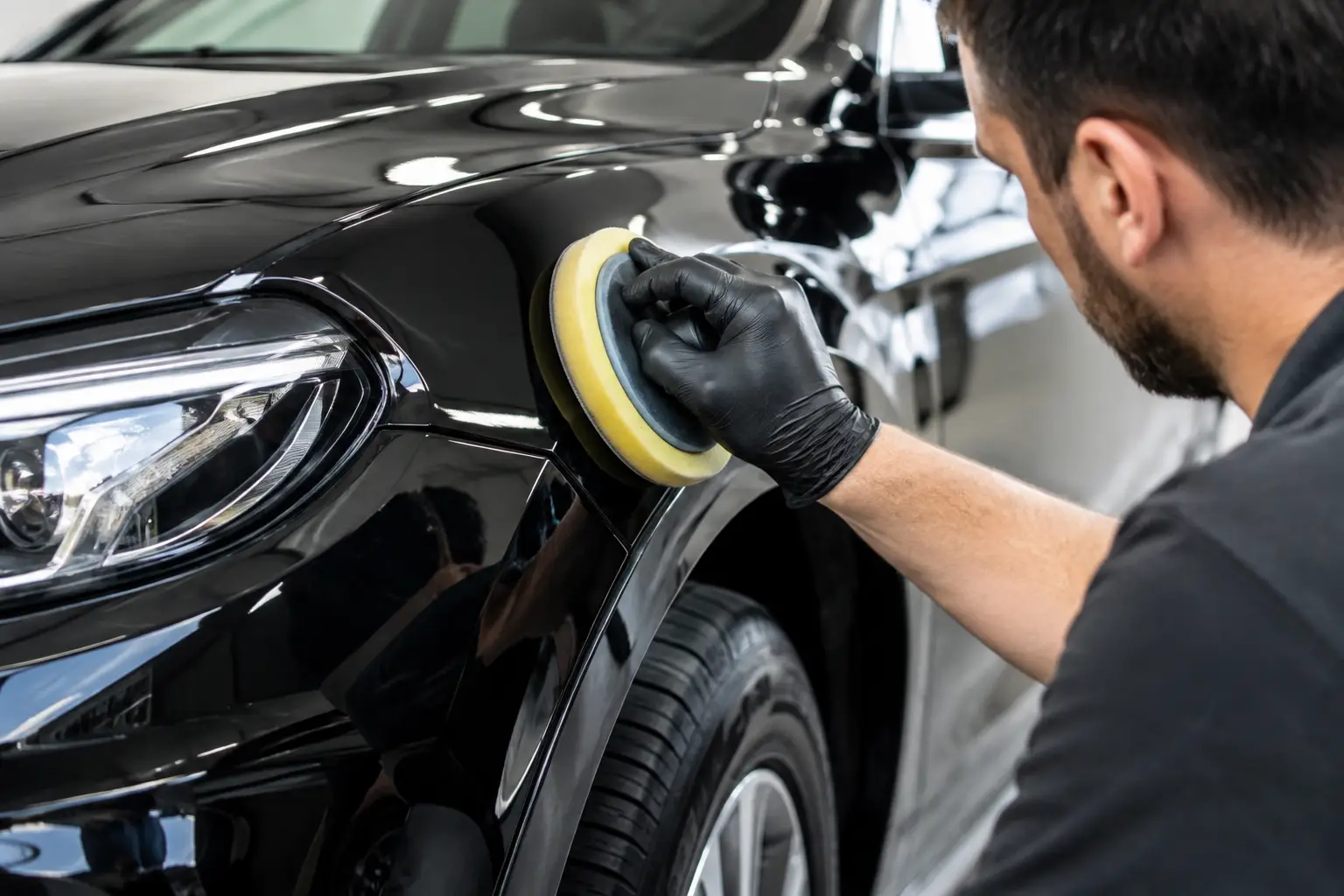
Black Paint Correction Results You Can Expect
Black paint correction results can be dramatic because dark paint reveals nearly every flaw. Under direct sunlight, garage lighting, or the LED lights at a gas station, light swirls, wash scratches, water-spot etching, and hazy oxidation become hard to ignore. When the paint is properly corrected, that same vehicle can regain a deep, clear reflection that makes its body lines look sharper and its finish look noticeably newer.
The key is setting realistic expectations. Professional paint correction can safely remove or reduce many defects in the clear coat, but it cannot reverse every type of damage. A quality result comes from matching the process to the vehicle’s paint condition, paint thickness, and long-term ownership goals rather than simply polishing as aggressively as possible.
Why Black Paint Shows Defects So Easily
Black vehicles look exceptional when clean, but they offer almost no place for paint defects to hide. Fine scratches scatter light across the surface instead of allowing it to reflect evenly. That is why a black SUV may appear gray or cloudy in sunlight despite being freshly washed.
Many of these marks come from ordinary use, not neglect. Automatic car washes, dry wiping dust from the hood, snow brushes, improper hand-wash techniques, and dirty microfiber towels can all leave light marring behind. In Denver, road grit, winter grime, UV exposure, and mineral-heavy water can add another layer of wear.
A proper inspection distinguishes removable defects from permanent damage. Swirls and light scratches are often in the clear coat. Deep scratches, rock chips, failing clear coat, and defects that have reached the color layer require a different solution, such as touch-up work, wet sanding in limited cases, or repainting.
What Professional Black Paint Correction Results Look Like
The most satisfying correction results are not just about shine. A vehicle can look glossy after a quick wax while still showing swirls from certain angles. True correction improves the clarity of the paint itself, allowing reflections to appear more defined and consistent across the panel.
On a well-maintained vehicle with light wash marring, a single-stage polish may remove a substantial amount of visible defects while improving gloss and depth. This is often a practical choice for daily drivers because it provides a clear visual upgrade without pursuing every last mark.
A multi-stage correction typically delivers a more dramatic transformation on heavily swirled black paint. The first polishing step focuses on defect removal, while a finer finishing step refines the surface for maximum clarity. Depending on the paint, condition, and safe correction limits, this process may remove roughly 70 to 95 percent of visible swirls and light scratches.
That range matters. No reputable detailer should promise 100 percent correction before examining the vehicle. Chasing complete defect removal may require removing more clear coat than is appropriate, especially on older paint, previously corrected panels, or vehicles with thin factory finishes. Preserving the paint is part of doing the job correctly.
The Difference Between Gloss and Correction
Glaze, wax, and some all-in-one products can temporarily fill or mask very fine imperfections. They may make black paint look better for days or weeks, but once those fillers wear away, the swirls become visible again.
Paint correction physically levels a very fine portion of the clear coat surrounding a defect, reducing the contrast between the scratch and the rest of the surface. The goal is a finish that looks better because the defects have been removed or diminished, not hidden under a temporary product.
What Determines the Final Result
The vehicle’s starting condition is the largest factor. A newer luxury sedan that has been carefully hand washed may need only a refinement polish. A family SUV that has spent years going through tunnel washes may need more extensive correction to restore clarity.
Paint hardness also changes the approach. Some factory clear coats resist scratches but require more cutting time to correct. Softer paint may correct quickly, yet it can also haze or mar more easily if the polishing process is not properly refined. Certified technicians test a small section first to identify the pad, polish, and technique that produce the best finish on that specific vehicle.
Paint thickness is equally relevant. A paint depth gauge helps assess how much material is available before significant correction begins. This is especially valuable on used vehicles, classic cars, and panels that may have been repainted. The safest plan is not always the most aggressive one.
Lighting affects what is visible, too. A corrected black finish should look impressive in sunlight and under inspection lighting, but it is normal for extremely deep isolated scratches or stone-chip damage to remain visible at close range. The goal is a dramatically improved, uniform appearance that holds up in real-world conditions.
Why Preparation Matters Before Polishing
Polishing dirty or contaminated paint can create more problems than it solves. Before correction begins, the exterior should be thoroughly washed and chemically decontaminated to remove traffic film, iron particles, brake dust, and embedded fallout. A clay treatment or synthetic clay process may also be used when bonded contamination remains on the surface.
This preparation creates a clean, smooth surface for the correction work and protects polishing pads from contamination. It also reveals the true condition of the paint. What looks like rough, dull black paint may partly be a buildup of contaminants blocking its clarity.
Trim, badges, sensitive edges, and neighboring surfaces should be protected during the process. Careful masking and controlled machine polishing are signs of meticulous work, particularly on vehicles with complex body lines, piano-black trim, and delicate exterior finishes.
Protecting Black Paint After Correction
Freshly corrected black paint deserves protection. Without it, the finish is exposed again to UV rays, road grime, bird droppings, bug residue, water spots, and the routine contact that causes new wash marring.
A ceramic coating is a strong option for owners who want longer-lasting protection and easier maintenance. It creates a durable, hydrophobic layer that helps water, dirt, and contaminants release more easily during washing. It also adds gloss and can make black paint look wetter and richer, although it does not make the vehicle scratch-proof.
For some owners, a high-quality sealant may be the better fit. The right choice depends on the vehicle’s use, how it is stored, the owner’s wash habits, and the level of maintenance they want. A daily-driven truck parked outside has different needs from a weekend sports car kept in a garage.
Protection only performs as well as the wash routine that follows it. Use clean microfiber towels, a pH-balanced car shampoo, proper lubrication, and gentle drying methods. Avoid brushing dust off dry paint or using worn towels. On black vehicles, small habits have an outsized effect on how long correction results remain visible.
Is Mobile Paint Correction a Good Fit?
Mobile service is ideal when the work can be completed in a clean, controlled setup at your home or workplace. It saves the time of dropping off a vehicle while still providing professional inspection, preparation, correction, and protection.
Conditions matter, however. Paint correction requires suitable weather, adequate space, and controlled lighting. High winds, rain, extreme cold, or heavy airborne dust can affect the quality and safety of the work. A professional mobile detailer will evaluate the location and may recommend a covered garage, carport, or a rescheduled appointment when conditions do not support the standard your vehicle deserves.
For Denver-area owners, FB Mobile Auto Detailing & Coating approaches correction with that same balance of convenience and care. The best result is never rushed to fit a schedule or forced in poor conditions.
When Paint Correction May Not Be the Right Answer
Correction is highly effective for swirl marks, light scratches, oxidation, and dullness, but there are limits. If a scratch catches a fingernail, it may be too deep for safe full removal. If clear coat is peeling, paint is cracked, or a panel has severe rock-chip damage, polishing cannot rebuild missing material.
In these cases, a detailer may improve the surrounding finish and make the overall appearance more consistent, but repainting or bodywork may be necessary for a complete repair. Honest recommendations protect both the vehicle and the owner’s investment.
Black paint rewards careful ownership. Start with a realistic assessment, choose correction that respects the condition of the clear coat, and protect the finish afterward. The result is more than a temporary shine – it is a vehicle that looks cared for every time the light hits it.
We Proudly serve the following cities and surrounding neighborhoods : Aurora , Cherry Hills Village Greenwood Village Castle Pines Lone Tree Castle Rock Highlands Ranch Centennial Parker Louisville Superior


