
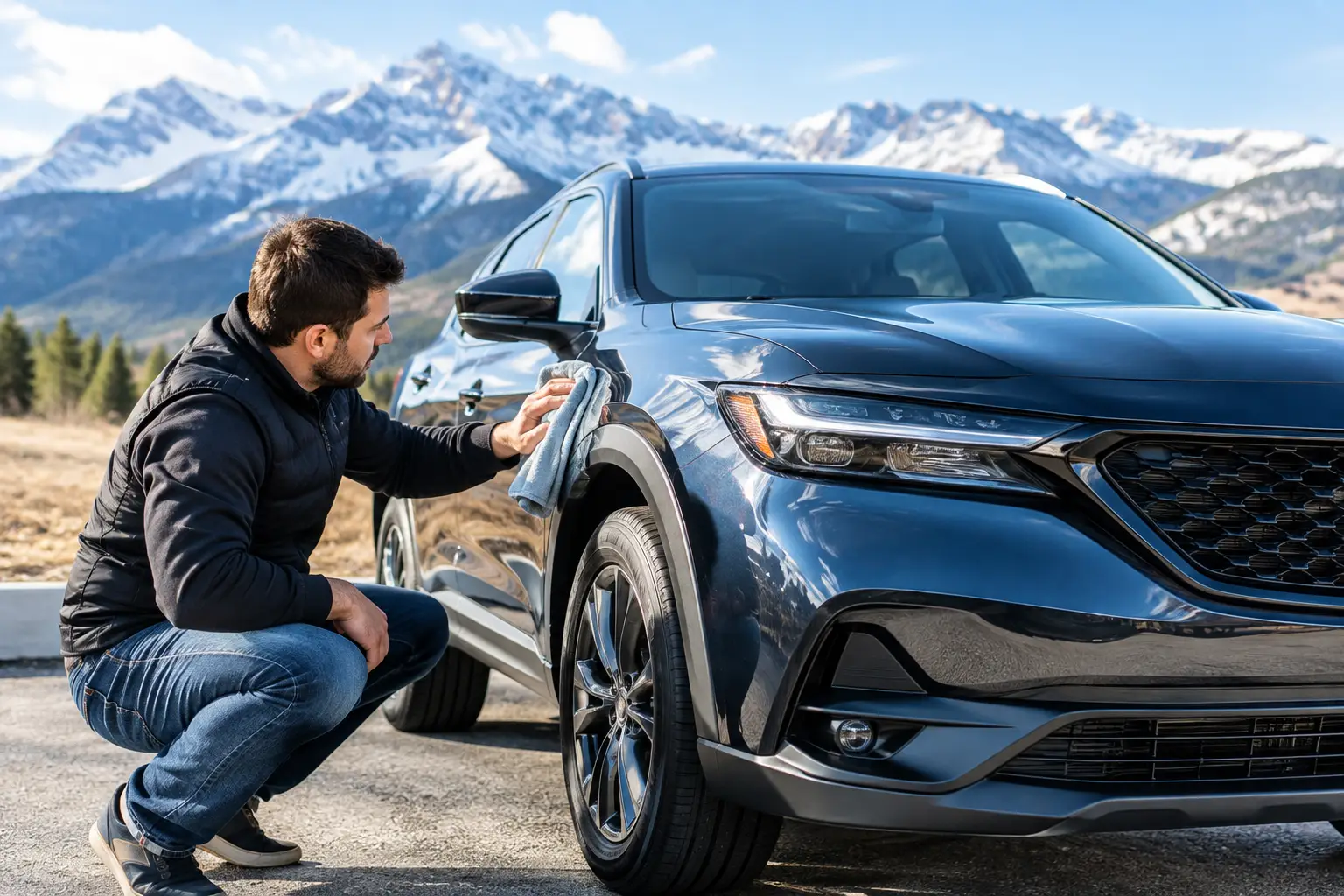
Car Paint Protection Guide for Colorado Drivers
A clean vehicle can still have unprotected paint. Under bright Colorado sun, road film, mineral deposits, winter de-icing material, and automatic-car-wash scratches gradually take the shine out of a finish. This car paint protection guide explains what actually protects your vehicle, what each option can and cannot do, and how to choose the right level of care for the way you drive.
Why Colorado Paint Needs More Than an Occasional Wash
Paint protection is not just for garage-kept sports cars. Daily drivers, family SUVs, trucks, and luxury vehicles all face conditions that slowly wear down exterior surfaces. Denver-area vehicles deal with intense UV exposure at elevation, dry dust, rain that leaves mineral spotting, construction debris, tree sap, bug residue, and winter road contaminants.
A basic wash removes loose dirt, but it does not always remove bonded contamination or correct the fine swirls that make paint look hazy in direct sunlight. More importantly, washing alone does not leave a durable barrier between your clear coat and the elements.
Your vehicle’s clear coat is its first line of defense, but it is not invincible. UV rays can contribute to oxidation and fading over time. Contaminants can etch or stain the surface when they sit too long. Repeated improper washing can create swirl marks, especially on dark paint. Protection helps reduce how strongly contaminants bond to the finish, makes regular cleaning easier, and preserves the gloss that supports vehicle pride and resale value.
Car Paint Protection Guide: Start With the Surface Condition
The best protection package depends on what is already happening to your paint. Applying a quality sealant or ceramic coating over scratches, embedded fallout, and oxidation may add protection, but it will also lock in the visible defects beneath it.
That is why professional paint protection begins with an assessment. A vehicle that is only a few months old may need a careful hand wash, chemical decontamination, and light polishing before protection. A vehicle with dull paint, wash-induced swirls, water spots, or light scratches may benefit from paint correction first.
Paint correction is a controlled polishing process that levels defects within the clear coat. A single-stage correction can noticeably improve gloss and reduce light swirls. Multi-stage correction is more intensive and may be appropriate for vehicles with deeper defects, neglected paint, or owners seeking a near-showroom finish. Not every scratch can be safely removed, and a responsible detailer will balance improvement with preserving as much clear coat as possible.
Before any protective product is installed, the paint should be properly cleaned and decontaminated. This can include removing iron particles, brake dust fallout, tar, bug residue, and other bonded debris that normal washing leaves behind. The smoother and cleaner the surface, the better the protection can bond and perform.
The Main Paint Protection Options
There is no single best choice for every vehicle. Budget, vehicle use, parking habits, desired appearance, and maintenance expectations all matter. The most common options range from short-term protection to longer-lasting coatings.
Wax
Traditional carnauba wax can provide a warm, rich appearance, especially on certain dark colors and classic vehicles. It offers some water repellency and a noticeable gloss boost, but its durability is limited. Depending on weather, washing habits, and product quality, wax may last only a few weeks to a few months.
Wax can make sense for an enthusiast who enjoys frequent detailing or for a vehicle that is stored indoors and driven sparingly. For a commuter vehicle exposed to Colorado weather, it usually requires more upkeep than most owners want.
Paint Sealant
Synthetic paint sealants are designed for durability and practical protection. They generally last longer than traditional wax and can provide strong water behavior, easier washing, and a clean reflective finish. Sealants are a good middle-ground option for drivers who want meaningful protection without committing to a ceramic coating.
The trade-off is longevity. A sealant still needs periodic reapplication, particularly if the vehicle spends most days outdoors or travels heavily salted roads in winter.
Ceramic Coating
Ceramic coatings use advanced chemistry to create a durable protective layer that bonds to the vehicle’s prepared paint. When professionally installed on corrected, decontaminated paint, a coating can enhance gloss, increase hydrophobic behavior, improve resistance to UV exposure, and make dirt and grime easier to wash away.
Ceramic coating is often the right choice for owners who want long-term protection with less maintenance effort. It is especially valuable for newer vehicles, luxury vehicles, dark-colored paint, and daily drivers that spend significant time outside.
However, ceramic coating is not a force field. It does not prevent rock chips, eliminate all scratching, or make a vehicle maintenance-free. It still needs proper washing, and road debris can still damage paint. Its biggest benefits are chemical resistance, improved cleanability, enhanced gloss, and a more durable barrier than wax or most sealants provide.
Paint Protection Film
Paint protection film, often called PPF, is different from a coating because it is a physical urethane film applied to painted panels. It is designed to provide a higher level of defense against rock chips, road debris, and light abrasion. It can be particularly useful on high-impact areas such as front bumpers, hoods, fenders, mirrors, and rocker panels.
PPF is typically the highest-investment option, but it offers protection that a ceramic coating cannot provide against physical impacts. Many owners combine film on vulnerable front-end areas with a ceramic coating on the rest of the vehicle. Whether that investment makes sense depends on how much highway driving you do, the value of the vehicle, and how long you plan to keep it.
Match Protection to How You Use Your Vehicle
The right package is not always the most expensive one. A properly prepared sealant can be an excellent fit for a leased vehicle or a well-maintained daily driver. A ceramic coating can be a better fit for an owner who wants easier upkeep and plans to keep their vehicle for years. PPF may be worth considering for a new truck, performance vehicle, or luxury car that sees frequent highway miles.
Consider these practical questions before choosing a service:
- Does your vehicle park outside most of the time?
- Do you drive on highways or gravel roads regularly?
- Are swirl marks, dullness, or water spots already visible?
- Do you want to maintain the finish yourself, or reduce the time spent washing?
- Is long-term resale value a major priority?
A family SUV with kids, pets, and daily errands may not need a show-car correction, but it can benefit greatly from decontamination, a gloss-enhancing polish, and durable exterior protection. A collector car may receive fewer miles but need careful UV protection and gentle hand washing. The goal is to build a protection plan around the vehicle’s real life, not a generic package.
Protection Only Works With Proper Maintenance
Even the best coating needs the right aftercare. Improper washing is one of the most common causes of fresh swirl marks and diminished hydrophobic performance. Avoid using dirty brushes, harsh detergents, or abrasive towels. Whenever possible, wash with pH-balanced products, clean microfiber towels, and a method that minimizes dragging grit across the paint.
Bird droppings, bug splatter, tree sap, and road salt should be removed promptly. These contaminants can be surprisingly aggressive if left on a hot panel or through repeated freeze-thaw cycles. During winter, regular washing matters even when the vehicle does not look visibly dirty. Salt and brine collect in wheel wells, lower doors, rocker panels, and other areas where corrosion and staining can begin.
Ceramic-coated vehicles also benefit from periodic maintenance services. A professional inspection and decontamination wash can remove mineral deposits and road film that reduce water beading. This is not a failure of the coating. It is simply part of keeping the protected surface performing as intended.
What Professional Preparation Changes
The difference between a quick coating application and a lasting result is preparation. Proper washing, paint decontamination, polishing, panel prep, and controlled application all influence the final appearance and durability. Skipping those steps can leave contaminants under the protection, uneven gloss, or poor bonding.
Professional service is also valuable when you are unsure whether a defect is removable. Some marks are superficial and respond well to correction. Others have penetrated the clear coat and may require touch-up or repainting. An experienced technician can identify the difference before unnecessary polishing removes more clear coat than needed.
For busy Denver-area owners, mobile detailing adds another practical benefit: the work can be completed at home or at the office without giving up a weekend at a shop. FB Mobile Auto Detailing approaches paint correction and ceramic protection as a tailored service, with the preparation and product choice based on your paint’s condition and your expectations for the vehicle.
The best time to protect your paint is before the damage becomes obvious in the sun. Whether you choose a seasonal sealant, a professionally installed ceramic coating, or targeted film protection, consistent care lets your vehicle keep the deep gloss and clean finish that make every drive feel better.
We Proudly serve the following cities and surrounding neighborhoods : Aurora , Cherry Hills Village Greenwood Village Castle Pines Lone Tree Castle Rock Highlands Ranch Centennial Parker Louisville Superior


