
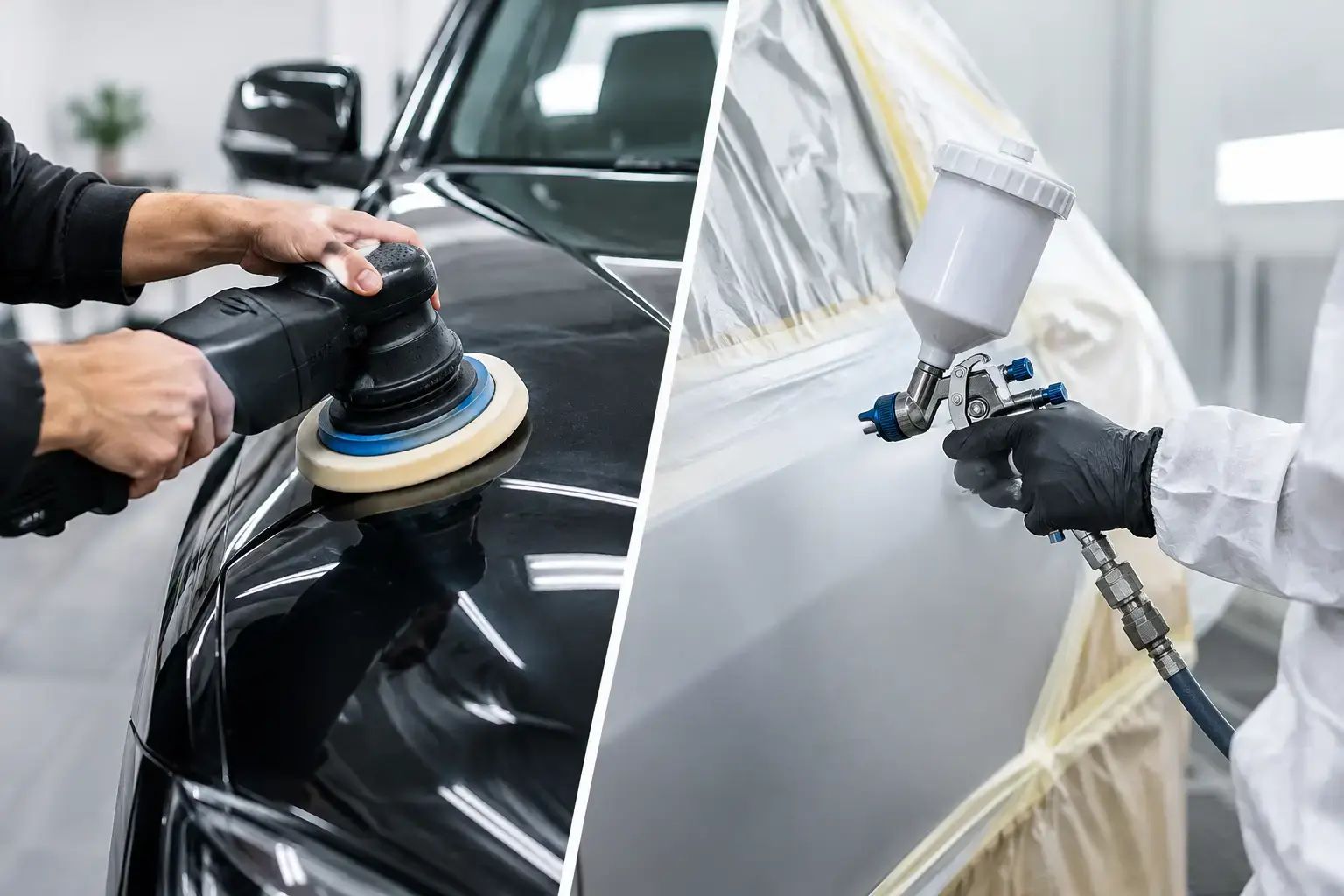
Paint Correction Versus Repainting Explained
A vehicle can look surprisingly worn even when the paint itself is still sound. Swirl marks catch the sun, water spots dull the clear coat, and light scratches make a well-kept car look older than it is. When deciding between paint correction versus repainting, the right answer depends less on how bad the finish looks at first glance and more on what has actually been damaged.
Paint correction restores defects within the existing clear coat. Repainting replaces damaged material with new paint. Both can improve appearance, but they solve very different problems, carry different costs, and affect originality and resale value in different ways.
What Paint Correction Actually Does
Most modern vehicles have a color layer protected by a transparent clear coat. Over time, washing friction, automatic car washes, road grit, tree sap, bird droppings, mineral deposits, and Colorado sun can leave that clear coat hazy or scratched. The paint may appear faded even though the color underneath is still intact.
Paint correction is a controlled polishing process that levels a very small amount of the damaged clear coat surrounding a defect. A trained technician uses paint measurements, machine polishers, pads, compounds, and finishing polishes to reduce or remove visible imperfections. Depending on the vehicle’s condition and paint thickness, this may be a single-stage correction or a more involved multi-stage service.
The goal is not to make the paint thinner just to chase perfection. Quality correction is measured, deliberate work. It balances visual improvement with preserving as much healthy clear coat as possible.
Paint correction is often an excellent fit for light-to-moderate swirl marks, wash marring, oxidation, dullness, shallow scratches, etched water spots, and paint transfer. It can bring back depth, clarity, and reflection that a basic wash or wax cannot produce.
What Correction Cannot Fix
A polish cannot repair damage that extends through the clear coat and into the color layer, primer, or metal. If you can catch a fingernail in a scratch, that does not automatically mean correction is impossible, but it does signal that complete removal may not be realistic. A professional can often soften the appearance of a deeper scratch, but polishing cannot put missing paint back.
Correction also cannot permanently solve peeling clear coat, rust, cracked paint, stone chips with exposed metal, or collision damage. Those issues need paint repair, bodywork, or repainting before protection is applied.
When Repainting Is the Better Choice
Repainting becomes necessary when paint has failed or when the vehicle has damage below the surface. A body shop may repaint a single panel, such as a bumper, door, hood, or fender, or perform a larger repair when multiple panels are affected.
Common reasons to repaint include clear coat peeling, deep gouges, rust, dent repair, collision damage, exposed primer, widespread chips, and severe sun damage that has broken down the finish. On an older vehicle, repainting may also be the only option when previous polishing has left too little clear coat for safe further correction.
A quality repaint is not simply spraying color onto a damaged area. Proper work requires preparation, repair of the underlying panel, primer when needed, accurate color matching, blending into adjacent panels, clear-coat application, and appropriate curing. This is why repainting is usually more expensive and takes longer than paint correction.
It also comes with variables. Factory paint has generally been applied under tightly controlled conditions. Even an excellent body shop can face challenges matching metallic flake, pearl effects, texture, and color that has changed slightly over years of UV exposure. The goal is a repair that looks natural, but a perfect match cannot be promised on every older or heavily weathered vehicle.
Paint Correction Versus Repainting: Key Differences
The central difference is straightforward: correction works with original paint, while repainting replaces paint that is damaged beyond restoration. That distinction matters for your budget, timeline, and vehicle’s long-term story.
For a daily driver with dull paint and wash swirls, correction can make a dramatic visual difference without the expense or downtime of repainting. It is especially valuable before selling a vehicle because a glossy, well-maintained original finish often presents better than a vehicle that looks neglected.
For a luxury vehicle, classic car, or collector vehicle with intact factory paint, preserving originality can be particularly important. Thoughtful correction can improve the finish while retaining the paint that came with the car. However, originality should never outweigh safety. Rust, exposed metal, and failing paint need to be repaired before they spread.
Repainting is generally the more appropriate investment after physical damage or paint failure. It restores protection where the finish no longer protects the panel, but it is not a shortcut for ordinary swirls or mild oxidation.
How to Tell Which Service Your Vehicle Needs
Start with the type of defect, not the overall frustration of seeing a tired finish. A vehicle covered in light swirls may look worse than a car with one deep scratch, yet the swirled vehicle may be the simpler one to restore.
Look closely at the damaged area in direct light. If the surface feels smooth and the mark changes or disappears from certain angles, it may be in the clear coat and a candidate for correction. If the scratch looks white, gray, black, or metallic because a lower layer is visible, the damage is likely deeper.
Peeling clear coat is another clear sign that polishing is not the answer. The surface may look cloudy, flaky, or patchy, often on horizontal panels exposed to years of sun. No wax, ceramic coating, or correction service can reattach failing clear coat.
A professional inspection is still the most reliable way to decide. Paint thickness varies between manufacturers, panels, prior repairs, and even different areas of the same panel. Measuring the paint and inspecting it under proper lighting allows a detailer to recommend a correction approach that respects the vehicle’s remaining clear coat.
Cost, Time, and Long-Term Value
Paint correction is typically less costly than repainting because it does not involve body repair, paint materials, color matching, or curing time. The final price depends on vehicle size, paint condition, desired level of improvement, and whether the vehicle needs a single-stage or multi-stage correction.
Repainting costs vary more widely. A small, localized repair may be reasonable, while a panel repaint with blending, dent repair, or rust treatment can become a significant body-shop project. The lowest quote is not always the best value when color match, panel preparation, and finish durability matter.
Time is another practical consideration. A mobile correction service can often be completed at your home or workplace, depending on the scope and weather conditions. Repainting requires a body-shop environment and may take days or longer, particularly if parts, repairs, or insurance approvals are involved.
For resale value, both services can help when used for the right purpose. Correcting neglected but original paint can make a used vehicle more appealing and show that it has been cared for. Repainting protects panels with genuine paint failure or collision damage. What hurts value is not repainting itself, but poor-quality repairs, visible mismatch, overspray, or unresolved rust.
Protect the Finish After the Repair
Whether a vehicle receives correction or repainting, protection determines how long the renewed appearance lasts. Corrected paint is clearer and glossier, but it is still exposed to UV rays, road salt, dust, hard-water minerals, and winter grime. Newly painted panels also need proper care once the body shop’s recommended curing period has passed.
For many Denver-area drivers, a ceramic coating is a practical next step after paint correction. It adds durable hydrophobic protection that helps water, dirt, and contaminants release more easily during washing. It also supports UV resistance and makes routine maintenance less demanding. A coating does not prevent every scratch or rock chip, but it helps preserve the clarity and gloss achieved during correction.
Regular hand washing, prompt removal of bird droppings and tree sap, and avoiding abrasive automatic washes will do more for paint longevity than any single product. Protection works best when paired with consistent care.
At FB Mobile Auto Detailing & Coating, the best recommendation starts with an honest look at your vehicle’s finish, not a one-size-fits-all package. If the paint can be safely refined, correction may restore the finish you thought was gone. If the damage goes deeper, repainting first protects the panel and gives your vehicle a sound foundation for the care it deserves.
We Proudly serve the following cities and surrounding neighborhoods : Aurora , Cherry Hills Village, Greenwood Village, Castle Pines, Lone Tree, Castle Rock, Highlands Ranch, Centennial, Parker, Louisville, Superior.


